Key Takeaways
Workplace noise is one of the leading causes of permanent hearing loss in Malaysia, particularly among workers in manufacturing, construction, and other noisy industries. Occupational noise-related hearing disorders remain the most commonly reported occupational disease in the country (Department of Occupational Safety and Health Malaysia, DOSH), yet many affected workers only realise their hearing has changed after years of gradual damage.
- Under Malaysia’s workplace noise regulations, employers must monitor and control excessive noise exposure. The legal workplace exposure limit is an average of 85 dB over an 8-hour workday, as prolonged exposure above this level may increase the risk of hearing damage (Department of Occupational Safety and Health Malaysia, DOSH).
- Employers must carry out noise risk assessments using registered competent persons, provide suitable hearing protection devices, and arrange regular audiometric testing for exposed workers.
- Early detection through annual hearing tests can identify damage before symptoms become noticeable, making prevention far more effective than waiting for problems to develop.
- At Clarisound, we support individuals with professional hearing assessments, monitoring programmes, and rehabilitation services for those whose hearing has already been affected by occupational noise exposure.
Introduction: What Does Malaysian Law Say About Workplace Noise Exposure?
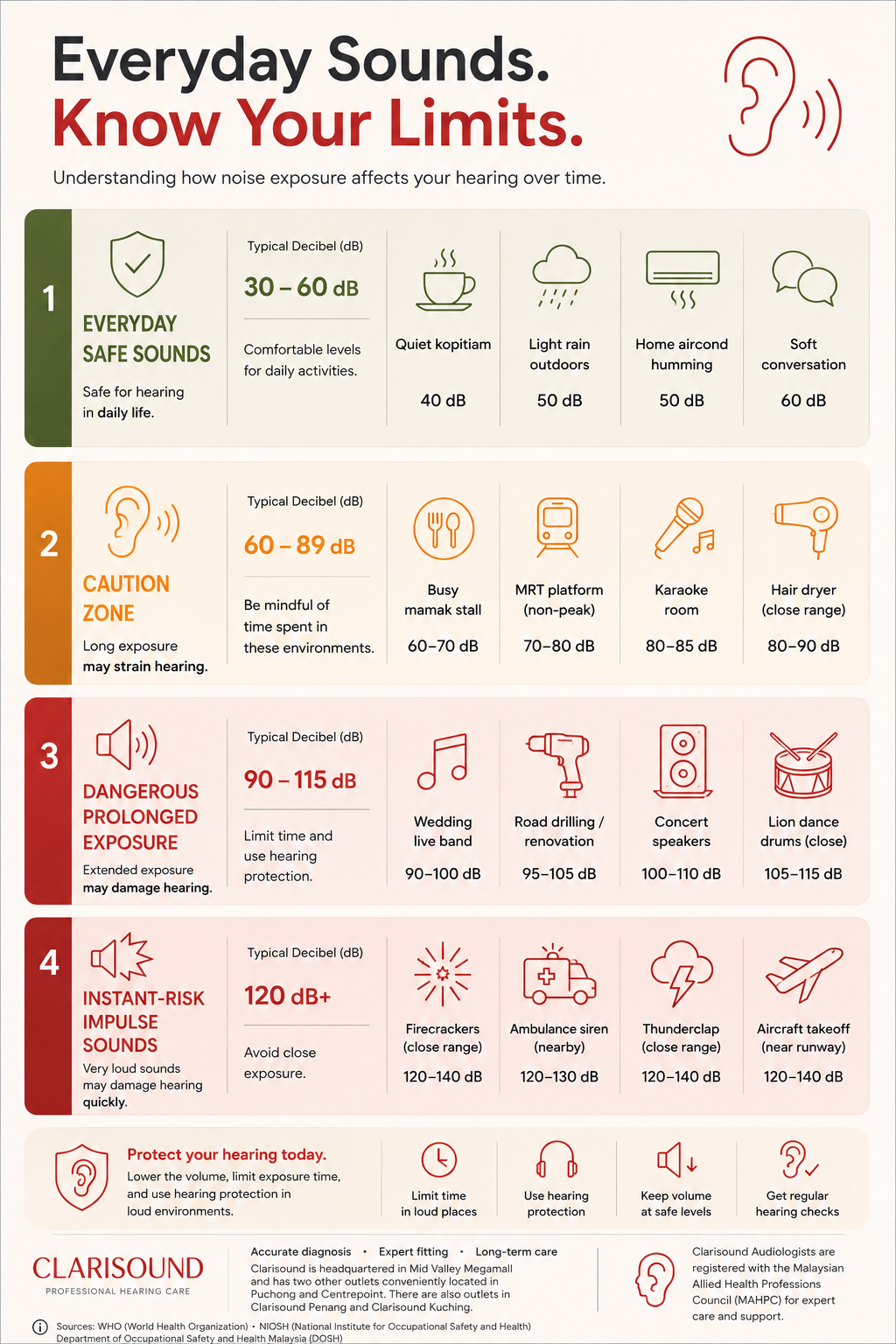
Occupational noise exposure refers to the sound levels workers encounter during their daily jobs that can, over time, cause irreversible damage to their hearing. In Malaysia, this is a significant concern across many industries, from the constant hum of factory machinery to the sudden roar of construction equipment, aircraft engines on airport tarmacs, and amplified music in entertainment venues.
The statistics paint a concerning picture. Noise-induced hearing loss has consistently ranked among the most commonly reported occupational diseases to Malaysia’s Department of Occupational Safety and Health (DOSH), affecting workers not only in manufacturing, but also in sectors such as construction, transport, and other noisy industries. Malaysia’s Occupational Safety and Health (Noise Exposure) Regulations 2019 strengthened workplace requirements for monitoring and managing harmful noise exposure as awareness of occupational hearing damage increased.
What makes noise induced hearing loss particularly troubling is its gradual progression. Many workers don’t notice the early signs. They might find it harder to follow conversations in busy kopitiams, need to turn up the television volume, or ask family members to repeat themselves during dinner. Many people adapt slowly to worsening hearing over the years, making the problem easy to miss until conversations become noticeably harder to follow. The inner ear hair cells responsible for converting sound waves into signals our brain understands cannot regenerate once destroyed.
We write this guide as hearing care professionals who regularly meet customers whose hearing problems began in noisy workplaces years or even decades earlier. Our experience reinforces a simple truth: early action through proper testing, consistent protection, and workplace monitoring is far more effective than waiting until problems become severe. Whether you work in a noisy environment, oversee workplace safety, or are simply concerned about a family member’s hearing, understanding how noise exposure affects hearing—and the protections available under Malaysian workplace regulations—is an important step toward preserving long-term hearing health.
Malaysia’s Workplace Noise Regulations: Understanding OSHA and Legal Exposure Limits
The Occupational Safety and Health Act 1994 (OSHA 1994, Act 514) forms the foundation of workplace safety regulation in Malaysia, including the management of occupational noise exposure. The Act empowers the Department of Occupational Safety and Health (DOSH) to develop and enforce regulations aimed at protecting workers across different industries.
Malaysia’s Occupational Safety and Health (Noise Exposure) Regulations 2019 replaced the earlier Factories and Machinery (Noise Exposure) Regulations 1989, expanding workplace noise management beyond traditional factory-focused settings. The updated regulations reflected growing awareness of occupational noise exposure across a wider range of industries and strengthened requirements for monitoring, hearing conservation, and risk control.
The aim of the 2019 regulations is straightforward: to reduce occupational noise-induced hearing loss through standardised approaches to noise measurement, exposure control, hearing protection, and audiometric monitoring. The regulations also establish clear definitions for what constitutes excessive workplace noise exposure.
| Noise Parameter | Legal Limit |
|---|---|
| Daily noise exposure level | 85 dB(A)TWA over 8 hours |
| Action level (triggering assessments) | 82 dB(A) |
| Maximum sound pressure level | 115 dB(A) |
| Peak sound pressure level | 140 dB(C) |
These regulations apply to factories, workshops, construction sites, airports, ports, entertainment venues, and any other workplace where noise can exceed safe limits. The broader scope helps ensure that occupational noise risks are managed more consistently across industries where harmful noise exposure may occur.
DOSH functions as the enforcement body, with inspectors authorised to visit workplaces, review noise assessment records, examine audiometric testing documentation, and issue improvement notices or penalties for non-compliance. The 2019 regulations increased maximum penalties to RM10,000, imprisonment up to one year, or both, reflecting the seriousness with which the government views employer obligations in this area.
The 85 dB Threshold: What Must Employers Do in Malaysia?
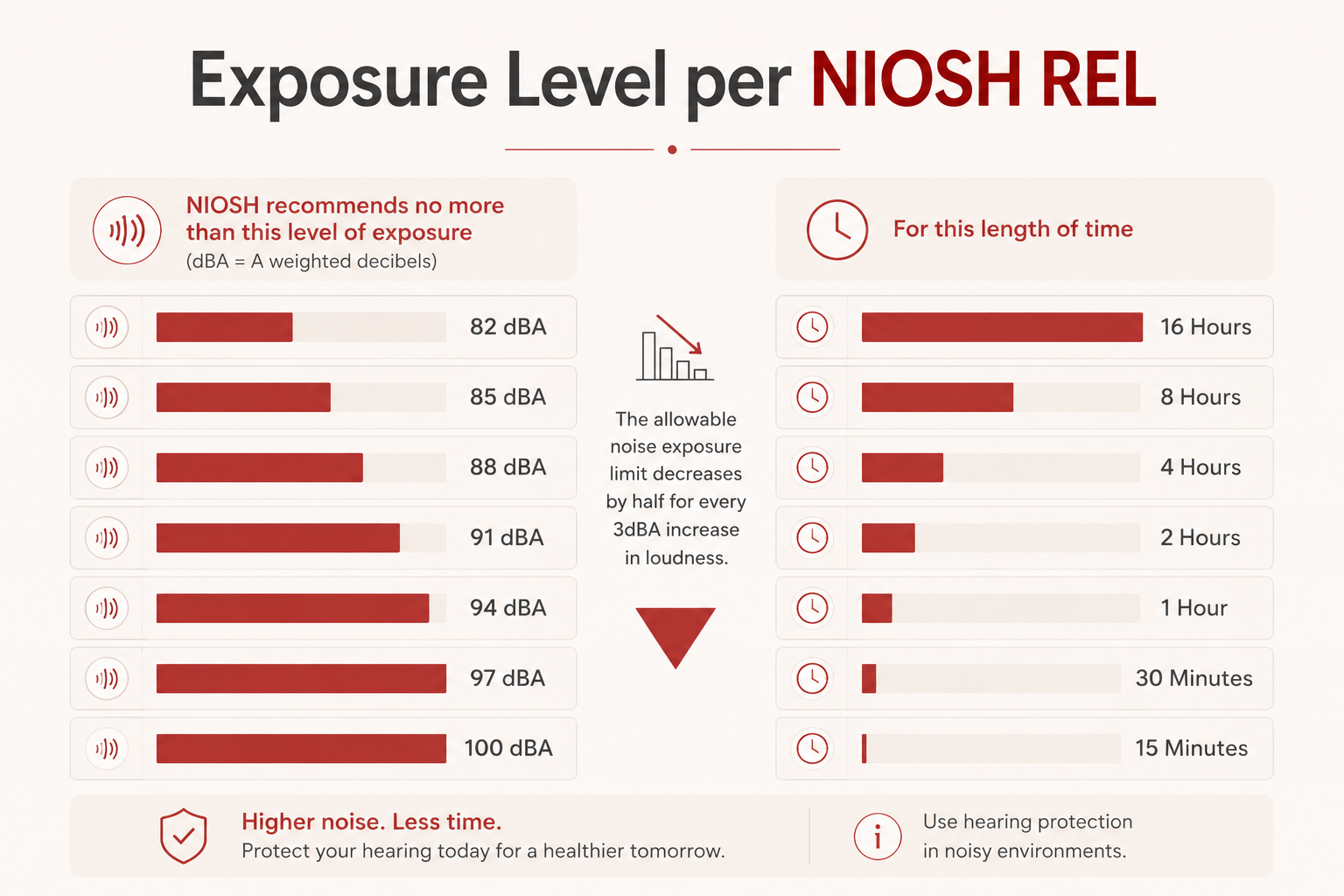
The 85 dB(A) limit represents the action level for Malaysian workplaces, calculated as a time-weighted average (TWA) over an 8-hour workday using a 3 dB exchange rate. This means that for every 3 dB increase in noise level, the permissible exposure time halves. At 88 dB(A), workers should be exposed for no more than 4 hours. At 91 dB(A), that drops to just 2 hours.
To put this in perspective, 85 dB(A) is roughly equivalent to:
- Loud traffic on a busy Malaysian highway
- Some industrial machinery at a distance
- A bustling workshop during peak activity
- Standing near a food processor in a commercial kitchen
Once workplace noise reaches or exceeds this threshold, employers must take specific legally mandated steps. These aren’t recommendations but requirements under the Occupational Safety and Health (Noise Exposure) Regulations 2019.
The 140 dB(C) peak limit addresses sudden, intense sounds like impact noises from stamping machines, gunshots, or explosions. Even brief exposure to sounds at this level can cause immediate and permanent damage, which is why the regulation distinguishes between average exposure and peak events.
An important concept to understand is that regulations focus on cumulative exposure over the working day. A worker might experience quiet periods interspersed with noisy tasks, but if their overall time-weighted average exceeds limits, protective measures become mandatory. This is why monitoring through personal dosimeters, worn by workers throughout their shift, provides more accurate data than spot measurements taken at a single moment.
For industries where noise consistently runs high, such as 90-100 dB(A), the mathematics of safe exposure become challenging. Shift patterns, job rotation, and engineering controls become essential tools for keeping individual workers within legal limits.
Which Malaysian Industries Have the Highest Noise Exposure Risks?
Several industries in Malaysia are more commonly reported for higher workplace noise exposure and a greater risk of noise-related hearing loss. DOSH reports and published studies identify manufacturing, construction, aviation, and entertainment as sectors requiring particular attention. However, it’s worth noting that any job involving machinery, power tools, or amplified sound can contribute to hearing damage if protection is inadequate.
Many workers in these sectors may not notice early symptoms for years. The gradual nature of noise-related hearing loss means subtle changes, such as difficulty hearing soft speech, needing to increase television volume, or finding crowded restaurants exhausting, often get dismissed as normal variation rather than warning signs.
Manufacturing
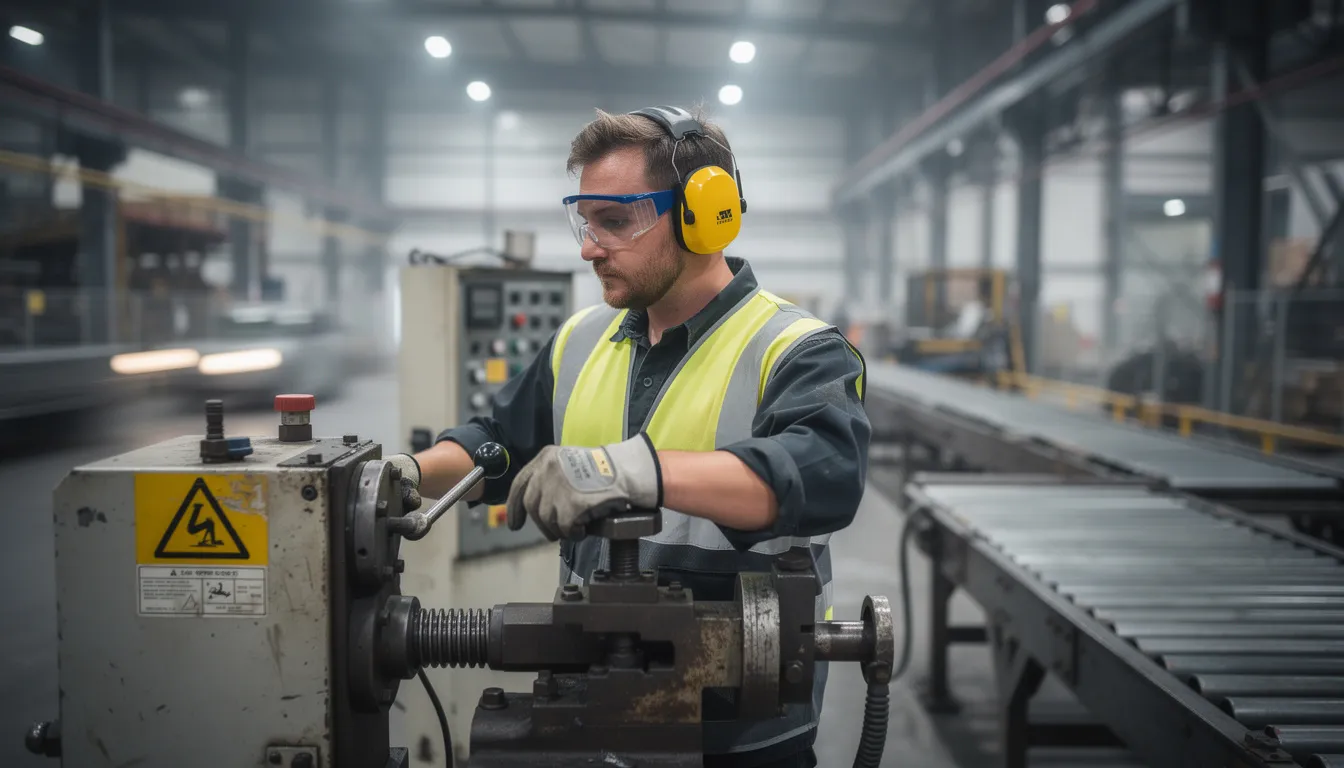
Malaysian manufacturing encompasses diverse environments, from metal fabrication and automotive component production to textiles, electronics assembly, and food processing. Each presents its own noise profile, but common sources include hydraulic presses, grinding machines, conveyor systems, pneumatic tools, and industrial compressors.
Studies in Malaysia have identified workers in metal, textile, and food processing industries being exposed to noise levels exceeding the occupational exposure action level of 85 dB(A), with some environments also producing hazardous peak noise levels. In metal fabrication particularly, where stamping, cutting, and grinding are routine, sound levels can peak dramatically with each machine cycle.
Many factories operate multiple shifts, compounding the risk for workers who may spend 10-12 hours on site during overtime periods. This extended exposure, combined with inadequate rest between shifts, accelerates the cumulative damage to hearing.
Effective hearing conservation in manufacturing should combine multiple approaches:
- Engineering controls such as machine enclosures, vibration dampening, and regular maintenance
- Administrative measures including job rotation and scheduled quiet breaks
- Consistent use of appropriate personal hearing protection
Construction
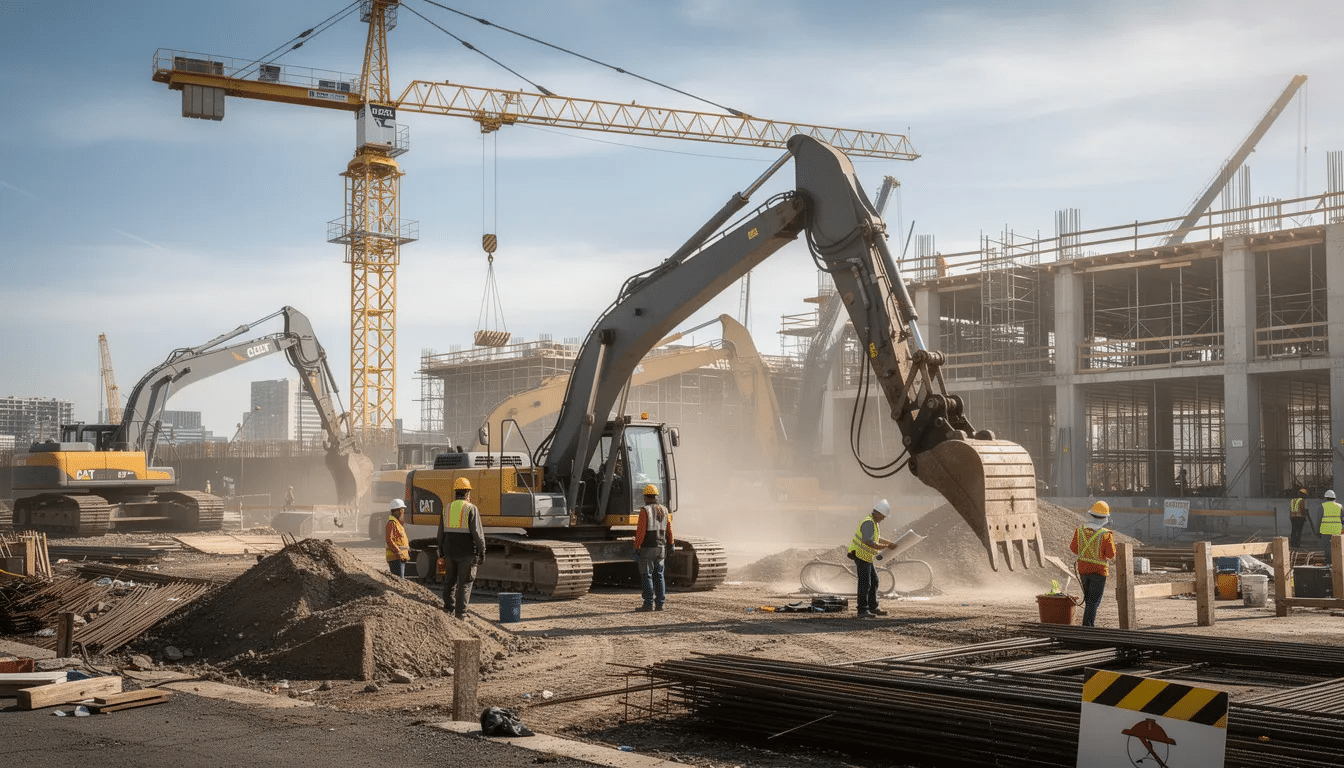
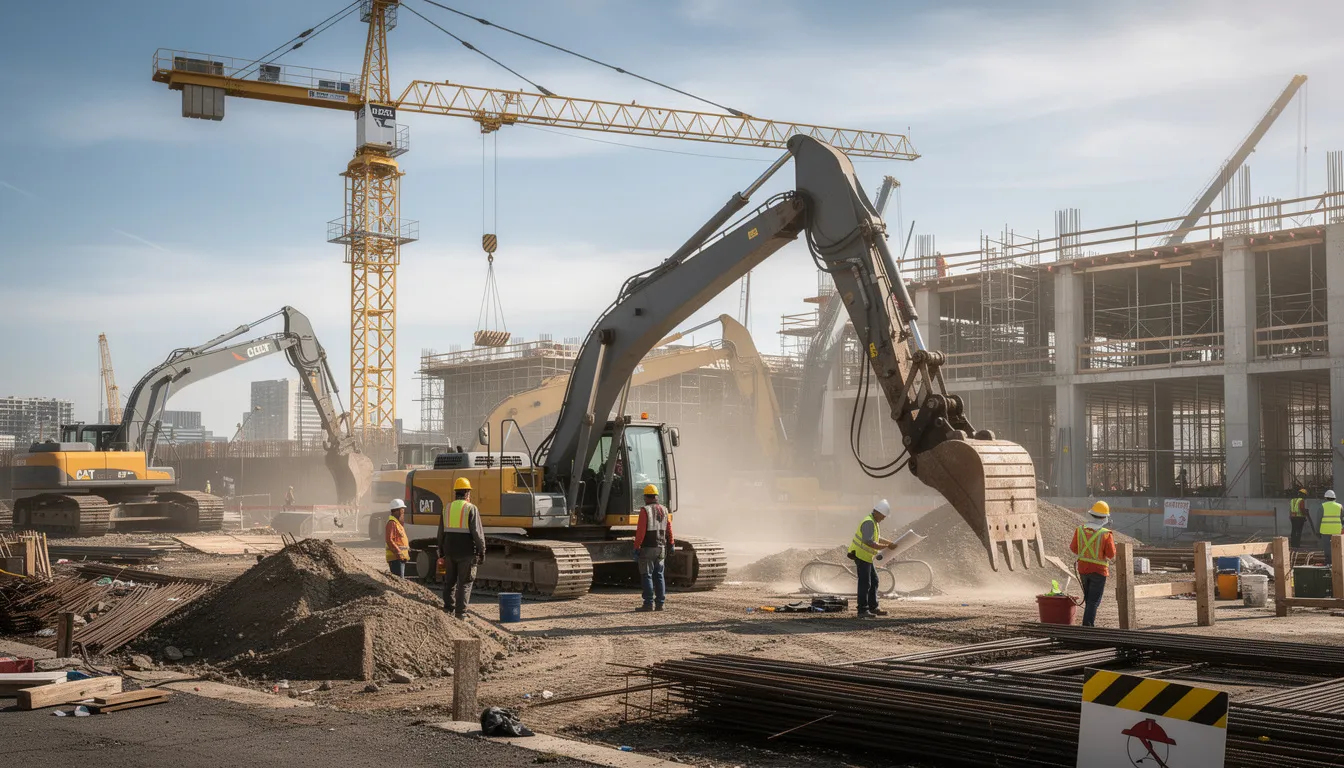
Malaysian construction sites present unique challenges for hearing protection. Common noise sources include piling equipment, jackhammers, concrete cutters, generators, compressors, heavy vehicles, and cranes. Unlike the relatively steady noise of a factory floor, construction noise is often intermittent but extremely loud, with peak levels that can exceed 100-110 dB(A) near the source.
The outdoor nature of construction work, combined with constantly changing locations and multiple subcontractors on site, makes consistent hearing protection use harder to enforce. Workers may remove earmuffs in the heat or forget to insert earplugs when moving between quieter and noisier zones.
Effective construction hearing conservation programmes typically include:
- Portable noise measurements to identify high-risk zones as work progresses
- Clear site rules communicated through signage and toolbox briefings
- Supervisory oversight to ensure hearing protection is actually worn
- Regular replacement of damaged or worn hearing protection devices
Aviation and Transport
Airport ground staff, baggage handlers, aircraft maintenance crews, and helicopter support teams face some of the most intense noise exposure in any industry. Jet engines at close range can easily exceed the 140 dB(C) peak limit, requiring both zone demarcation and double hearing protection (earplugs combined with earmuffs) for anyone working on the apron or in hangars.
Beyond aviation, transport maintenance depots, bus terminals, and rail yards can also reach harmful noise levels from diesel engines, air horns, brake systems, and maintenance equipment. Workers in these environments may not always recognise their risk because they’re not in what’s traditionally considered a “factory” setting.
Strict hearing protection zones with clear signage, specialised training for all staff, and robust enforcement of protection device use are essential for these high-risk environments.
Entertainment and Hospitality

Musicians, DJs, sound engineers, club staff, and event crews across Malaysia regularly encounter amplified music well above 100 dB(A) during concerts, festivals, and nightly entertainment venue operations. While a single loud event might not cause permanent damage, repeated exposure over months and years can result in noise induced hearing loss and persistent tinnitus.
The entertainment and live event sectors face particularly complex noise management challenges because high sound levels are often integral to the audience experience and operational environment. At the same time, workers such as musicians, DJs, sound engineers, and venue staff may require specialised hearing protection solutions that preserve sound clarity while reducing harmful exposure.
Beyond nightclubs and concert venues, cinemas, karaoke lounges, and some busy restaurants maintain sustained high sound levels that affect both workers and customers. Practical management strategies include:
- Monitoring sound levels throughout shifts
- Scheduling quieter periods where possible
- Providing appropriate hearing protection, including musician-type earplugs that reduce volume while preserving sound clarity
- Training staff to recognise early symptoms of hearing fatigue
Your Employer’s Responsibilities Under Malaysian Noise Regulations
Under Malaysia’s OSHA 1994 and Noise Exposure Regulations 2019, employers are required to take reasonable steps to manage harmful workplace noise exposure. This typically involves a combination of noise assessment, control measures, hearing protection, and ongoing hearing conservation practices.
A proper Hearing Conservation Programme integrates multiple elements: noise risk assessments, engineering and administrative controls, hearing protection provision, regular audiometric testing, and ongoing training. Each component supports the others, and employers must ensure the programme is reviewed and updated regularly as equipment, processes, or workforce composition changes.
Employers must use competent persons or qualified professionals for noise measurements, maintain detailed records, and make documentation available for DOSH inspection. Failure to meet these obligations can result in penalties of up to RM10,000, imprisonment, or both.
Noise Risk Assessments
Under Malaysian regulations, additional hearing conservation measures may be required when workplace noise exposure reaches certain action levels, while the permissible exposure limit is set at 85 dB(A) averaged over an 8-hour workday.
In Malaysia, these assessments must be carried out by DOSH-registered competent persons using calibrated sound level meters and personal dosimeters. Occupational noise monitoring measures both the loudness and duration of workplace sound exposure to determine whether hearing protection and other control measures are required under safety regulations.
Key requirements for noise risk assessments include:
- Initial assessment when operations begin or noise sources are introduced
- Repeat assessments at least every five years
- Additional assessments whenever major changes occur in machinery, processes, or layout
- Documented findings that form the basis for control measures
The NRA report must be retained for 30 years, ensuring a long-term record of workplace conditions and the measures taken to protect workers.
Hearing Protection Provision
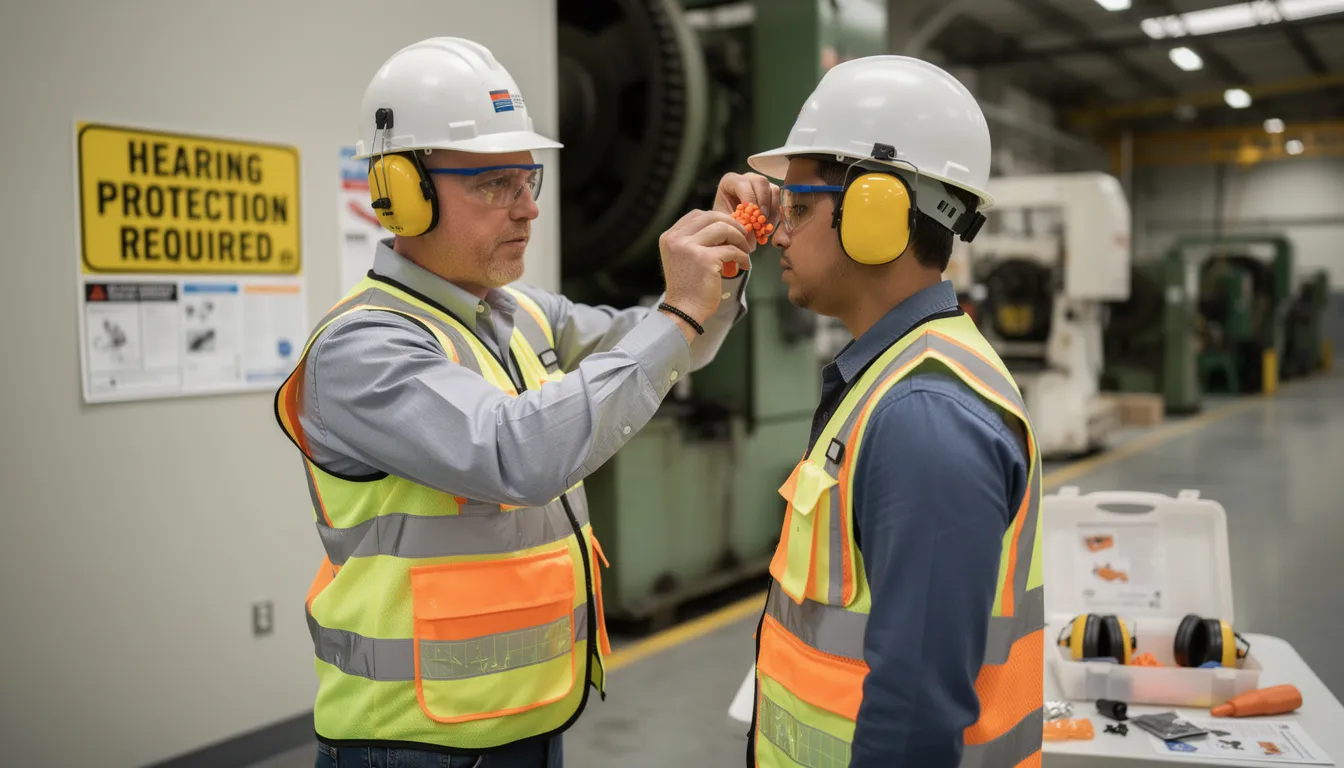
When workplace noise cannot be sufficiently reduced through engineering or administrative controls, employers are required to provide appropriate hearing protection for workers at no cost. Effective hearing protection should include:
- Suitable noise reduction without excessively blocking important communication or warning sounds
- A comfortable fit appropriate for the working environment, including heat, humidity, and dust exposure
- Compatibility with other safety equipment such as helmets or hard hats
- Different sizes and styles to accommodate individual workers comfortably
Employers should offer choices between earplugs, earmuffs, or combined protection depending on noise levels and job requirements. Damaged or worn devices must be replaced promptly.
In addition to provision of hearing protection gear, employers must also:
- Designate high-noise areas where protection is mandatory
- Supervise and enforce correct, consistent use
- Provide instruction on proper insertion and wearing techniques
- Address worker concerns about comfort or communication difficulties
Annual Hearing Tests (Audiometric Testing)
Employers must arrange baseline audiometric tests before or within three months of workers starting noise-exposed roles, followed by regular annual testing. These tests must be conducted at DOSH-registered Audiometric Testing Centres under the oversight of qualified Occupational Health Doctors.
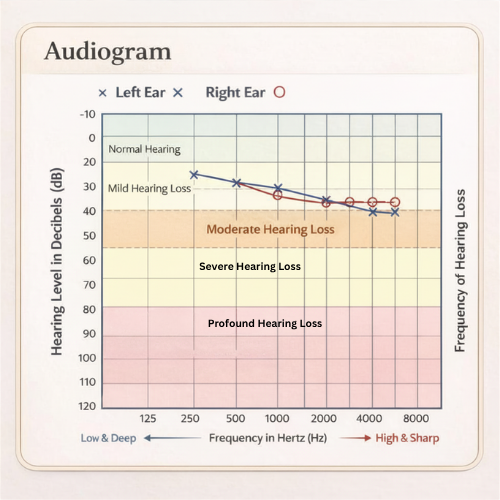
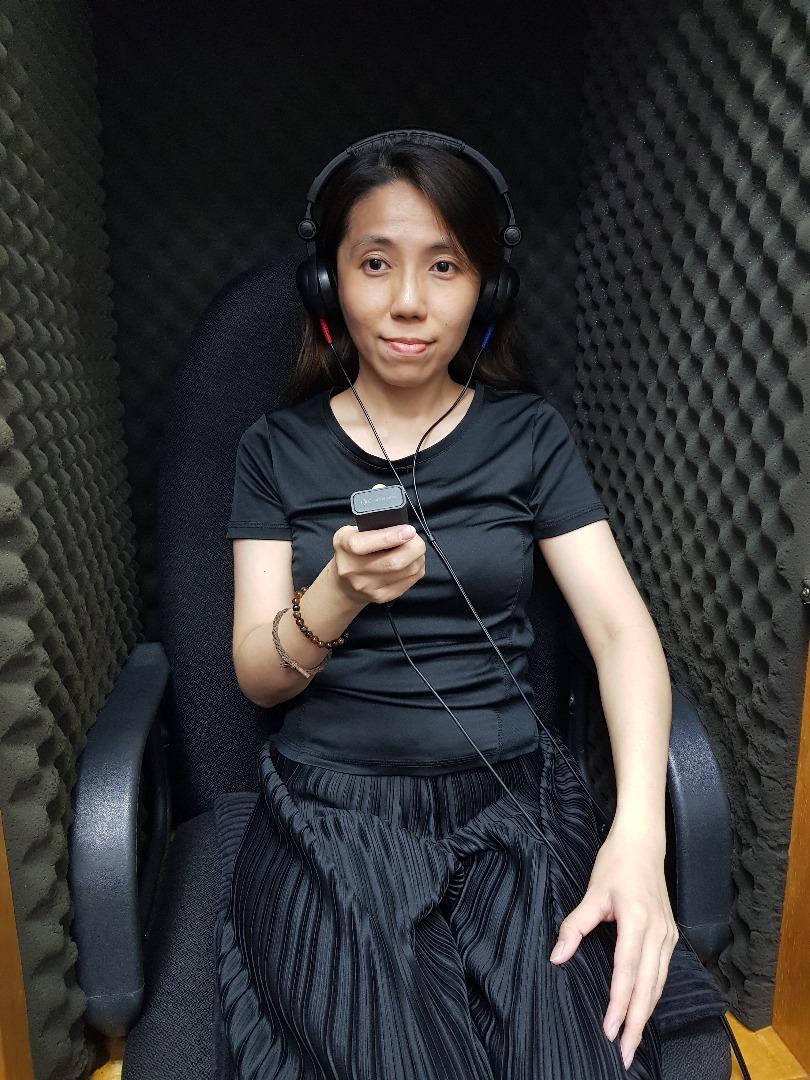
An audiometric test is straightforward from the worker’s perspective: sitting in a quiet booth and indicating when different tones are heard through headphones. The results, plotted on an audiogram, reveal hearing sensitivity across different frequencies. The 2019 regulations specifically require testing at 8kHz to detect early high-frequency losses that often precede more noticeable hearing difficulties.
Test results should be reviewed by qualified professionals to identify any threshold shifts indicating early damage. Workers have a right to be informed of their results and to receive advice on protecting their hearing both at work and in daily life.
Any confirmed permanent threshold shift or occupational noise-related hearing disorder must be notified to DOSH, and the employer must investigate whether workplace controls need strengthening.
Training and Education
Training and hearing conservation education should be communicated in formats and languages that workers can easily understand. In Malaysia’s multilingual workforce, this may include Bahasa Malaysia, English, Mandarin, or Tamil, supported by practical demonstrations and clear visual guidance where appropriate.
Training should cover:
- How excessive noise can affect hearing over time
- Legal exposure limits and and why they matter
- Correct use, care, and maintenance of hearing protection devices
- Early signs of hearing loss and tinnitus, such as ringing in the ears or difficulty hearing speech clearly
- Procedures for reporting hearing concerns or workplace noise issues
- Identification of high-noise areas and the hearing protection required in those zones
Training must be conducted at least annually and whenever new noise hazards or when onboarding new workers. Interactive approaches such as toolbox talks, visual demonstrations, and on-site practice are effective teaching formats.
What Workplace Hearing Protection Measures Should Workers Expect?
Malaysia’s workplace noise regulations are designed to support safer working environments through appropriate noise monitoring, hearing protection, and hearing conservation practices. Employees should understand the protective measures and support systems available in their workplace.
Your main rights as a noise-exposed worker include:
- A safe workplace where noise is controlled to the extent reasonably practicable
- Information about noise risks in your work area, including access to noise assessment results
- Suitable hearing protection provided free of charge, with training on correct use
- Annual audiometric testing if exposed above the action level, with clear communication of results
- Training and supervision to help you understand and manage noise risks
Malaysia’s workplace safety framework encourages employers and employees to work together in identifying and managing occupational noise risks through appropriate assessment, monitoring, and hearing conservation measures.
For serious or persistent non-compliance, workers can report directly to DOSH. The department can investigate complaints, inspect workplaces, and issue notices requiring employers to take corrective action.
Symptoms such as ringing in the ears (tinnitus), muffled hearing, or increasing difficulty following conversations should not simply be ignored—especially in consistently noisy work environments. Early assessment and workplace review can help identify potential hearing risks before hearing changes become more significant.
Types of Hearing Protection for Different Work Environments
No single hearing protection device suits every job. The right choice depends on the noise level, duration of exposure, comfort requirements, communication needs, and the specific work environment. Hearing protection should be selected carefully to provide sufficient noise reduction while still allowing workers to communicate effectively and remain aware of alarms, machinery, or warning signals where required for safety.
Common types of hearing protection include:
| Type | Typical Attenuation | Best Suited For |
|---|---|---|
| Disposable foam earplugs | Often rated around
20-33 dB |
General factory noise, one-time or occasional use |
| Reusable silicone earplugs | Often rated around
18-28 dB |
Regular use in moderate noise, easier to clean and maintain |
| Custom-moulded earplugs | Varies by filter and design 15-30 dB |
Long-term use, improved comfort and consistent fit |
| Earmuffs | Often rated around
21-33 dB |
Intermittent loud impacts, easy to put on and remove |
| Combined protection (earplugs + earmuffs) | 35+ dB | Extremely loud environments like aviation or heavy piling |
| Musician/high-fidelity earplugs | Often rated around
10-20 dB |
Entertainment workers who need to hear clearly at lower volume |
Selecting appropriate protection involves matching the device’s Noise Reduction Rating (NRR) to the workplace noise level, aiming to bring effective exposure below 82 dB(A). A common mistake is assuming maximum protection is always best; in practice, a worker who can’t hear colleagues or machinery signals is similarly at risk.
For hot and humid Malaysian work environments, comfort becomes particularly important. Earmuffs can trap heat and cause sweating, leading to a preference for earplugs. However, earplugs require proper insertion technique to be effective, and workers experiencing ear pain, irritation, discharge, or recurring ear infections should seek appropriate medical advice if discomfort occurs during use.
We encourage workers to seek professional advice on hearing protection fit and selection, and to combine workplace protection with safe listening habits off the job. Limiting earphone volume, using earplugs at concerts, and taking breaks from noise all contribute to preserving hearing for the long term.
What Should You Do If Workplace Noise Feels Excessive?
Workers who are regularly exposed to loud workplace noise, or who begin noticing symptoms such as tinnitus, muffled hearing, or difficulty understanding speech, should raise these concerns through appropriate workplace safety channels and seek hearing assessment early.
Malaysia’s occupational safety framework provides guidance on workplace noise management, hearing protection, and hearing conservation practices. Employers, occupational safety personnel, and regulatory authorities such as the Department of Occupational Safety and Health (DOSH) may all play a role in addressing workplace noise concerns where appropriate.
Most importantly, hearing changes should never simply be ignored. Early hearing evaluation can help identify possible noise-related hearing damage before communication difficulties become more significant.
Even when some degree of permanent hearing loss has occurred, professionally guided hearing rehabilitation and appropriately fitted hearing aids can still significantly improve speech clarity, communication, and quality of life.
Clarisound’s Occupational Hearing Services for Individuals and Companies
As a Malaysian hearing care provider, Clarisound focuses on what matters most: accurate diagnosis, tailored solutions, and long-term support. We understand that hearing loss from workplace noise is both a medical condition and a life quality issue affecting communication with family, friends, and colleagues.
Services for Individuals
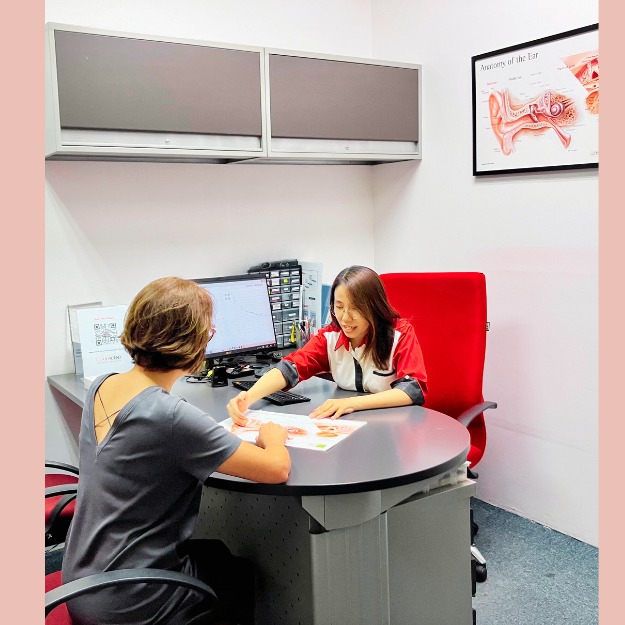
We offer free hearing tests for anyone who suspects their hearing may have been affected. This service provides a clear baseline or second opinion without obligation.
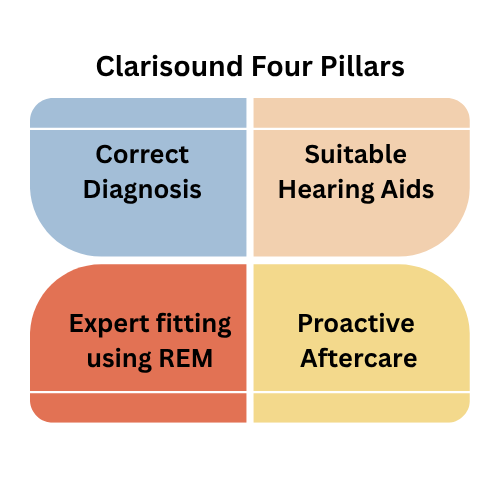
Our rehabilitation pathway follows a structured approach:
- Accurate Diagnosis – Comprehensive assessment by MAHPC-registered audiologists to understand the type and degree of hearing loss
- Correct Device Selection – Where hearing aids are appropriate, personalised recommendations based on your lifestyle, work environment, and communication needs
- Expert Fitting – Precise programming using Real-Ear Measurement (REM) to ensure devices perform optimally in real-world conditions
- Proactive Long-Term Care – Ongoing follow-up appointments to adjust settings, address concerns, and adapt to changing hearing needs
We partner with advanced hearing technology brands like Signia and Rexton to provide discreet, digital, rechargeable, and Bluetooth-enabled hearing aids suited to Malaysian sound environments. Whether you need to hear clearly in busy markets, on public transport, or during family gatherings, our solutions are designed for real life, not laboratory conditions.
Clarisound’s Approach
Our audiologists are non-commissioned, meaning our recommendations focus entirely on what genuinely supports each customer’s hearing and lifestyle. We’re not motivated by product sales targets but by achieving the best possible outcomes for the people we serve.
FAQ
How do I know if my hearing is already affected by workplace noise?
Common early signs include difficulty following conversations in noisy environments like kopitiams or busy restaurants, needing to turn up the television volume higher than others prefer, frequently asking family members to repeat themselves, or experiencing ringing, buzzing, or hissing sounds in your ears after work shifts.
These changes often develop slowly over years, leading many people to assume they’re just “getting older” rather than recognising workplace noise as a contributing factor.
If you notice any of these signs, even if difficulties seem slight, we encourage you to book a free hearing test with us. Early detection gives you more options for protecting your remaining hearing and improving clarity through appropriate support.
How often should my hearing be tested if I work in a noisy environment?
Under Malaysian regulations, workers regularly exposed to noise above legal limits should have a baseline audiometric test when they start the job, followed by annual testing thereafter. These workplace tests should be conducted at registered Audiometric Testing Centres and reviewed by qualified professionals.
If you notice sudden changes in your hearing, experience tinnitus, or increased difficulty understanding speech, don’t wait for the next scheduled company test. Arrange for an assessment as soon as possible, either through your employer or contact us directly.
We provide hearing assessments that can complement workplace programmes, giving you more detailed guidance on your long-term hearing health and options for protection or rehabilitation.
I no longer work in a noisy job, but my hearing seems worse. Is it too late to do anything?
It’s never too late to have your hearing assessed. Even if the damaging noise exposure happened years or decades ago, modern hearing care can often improve clarity and reduce the effort required to follow conversations.
A comprehensive hearing assessment can help distinguish between age-related and noise-related components of hearing loss, guiding options such as hearing aids, communication strategies, and tinnitus management. Many people are surprised by how much better they can hear with appropriate support.
We welcome customers who are retired or have changed careers to book a no-obligation consultation. Our goal is to help you hear better at home, during family gatherings, and in your community, regardless of when the original damage occurred.
Can I protect my hearing at home and during leisure activities as well?
Absolutely, and doing so gives you the best chance of maintaining good hearing into older age. Many Malaysians receive significant additional noise exposure from personal audio devices, motorcycles, DIY power tools, and entertainment venues.
Practical protective habits include:
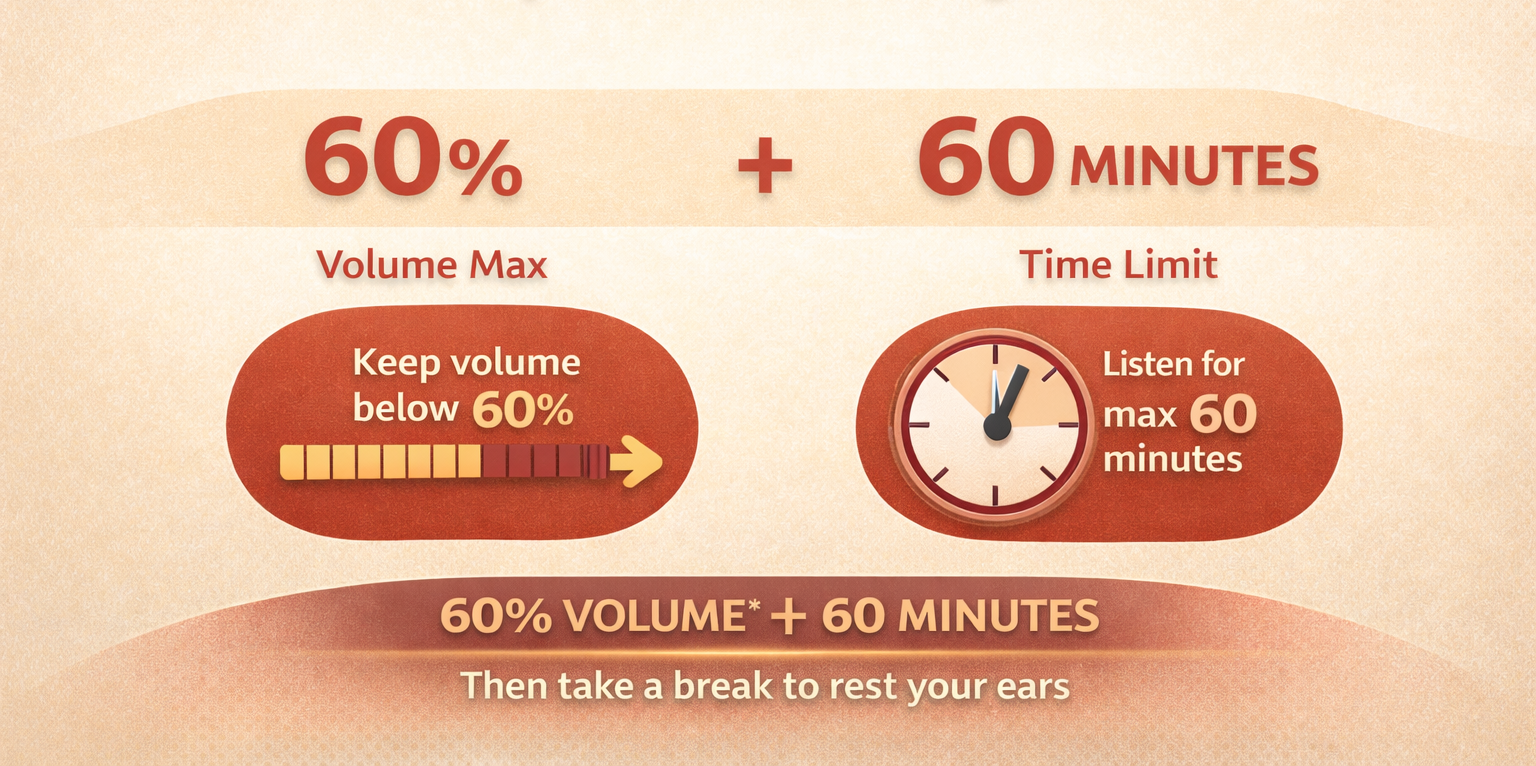
- Following the 60/60 rule for earphones: no more than 60% volume for 60 minutes at a time
- Using earplugs at concerts, sporting events, or when riding in very loud traffic
- Taking “quiet breaks” to let your ears recover after noise exposure
- Choosing quieter venues or seating positions when dining out
Protecting your hearing both at work and off the job is a long-term investment in your ability to communicate, stay connected with family, and maintain independence as you age.
What should I bring when I come to Clarisound for a hearing test related to workplace noise?
To help us give you the most accurate and personalised assessment, please bring:
- Any previous hearing test results (from workplace programmes or other providers)
- A list of past and current jobs involving noisy exposure, including approximate dates and the types of noise involved
- Information about any existing medical conditions or medications that might affect hearing
- Details of current hearing difficulties and when you first noticed them
This background helps our audiologists build a clearer picture of how work and lifestyle have affected your hearing over time. With this context, we can provide more accurate advice tailored to your specific situation.
The test itself is comfortable and non-invasive, similar in concept to an eye exam but for your ears. A typical appointment, including discussion of results and recommendations, takes less than an hour. There’s no obligation to purchase anything, and our focus is always on helping you understand your hearing and explore your options.