

When Weight Affects What You Hear
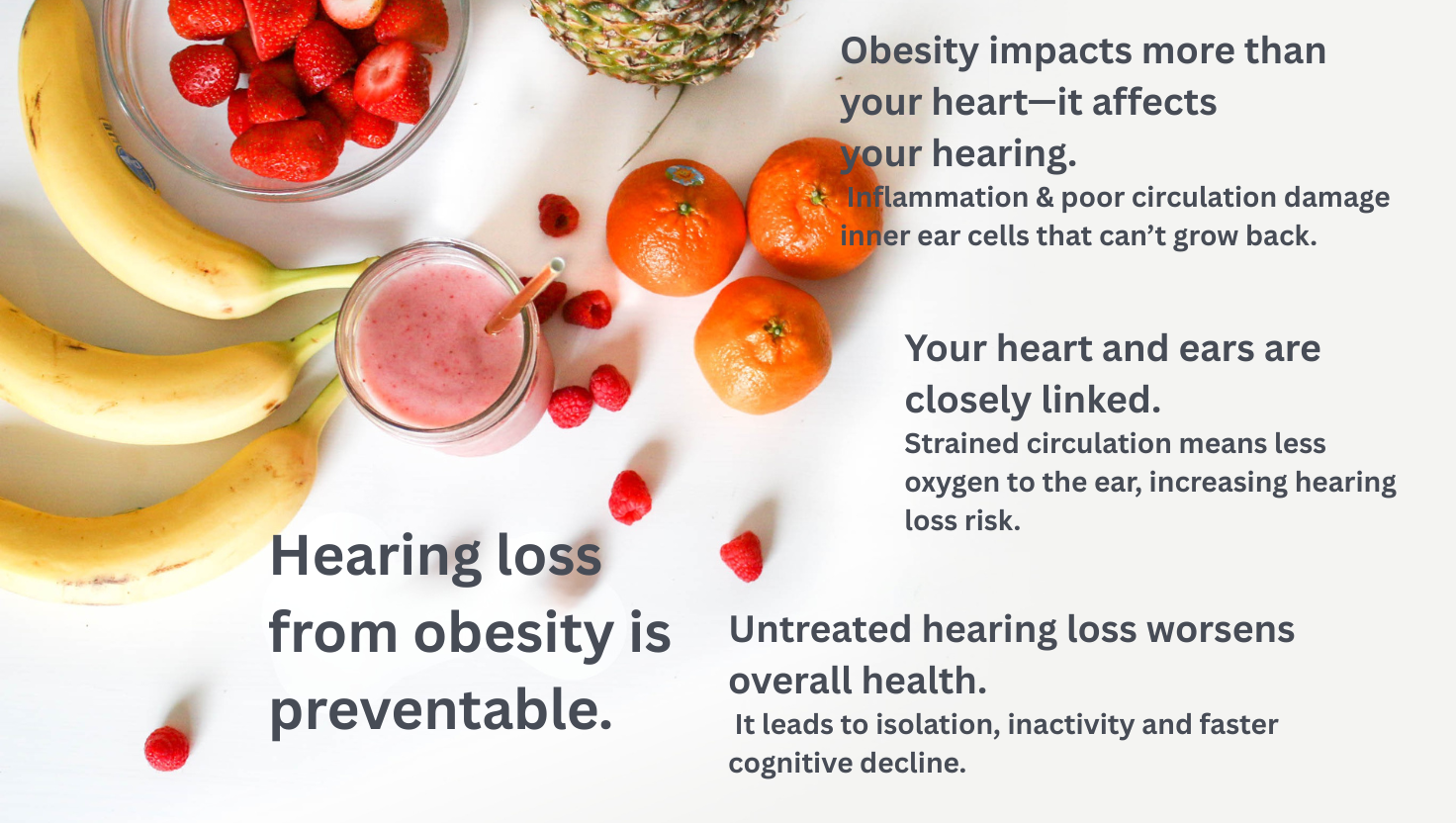
Did you know that your ears can feel the effects of your waistline? Obesity isn’t just a risk to your heart or joints—it may also impact how well you hear.
Beyond the well-known risks to the heart and joints, obesity can quietly affect your hearing. Studies show that obese individuals are up to 55% more likely to experience hearing loss than those with normal weight. That’s because excess fat triggers inflammation and oxidative stress, which damage the tiny blood vessels and nerves inside your ear. As these changes build over time, they raise your risk of developing age-related hearing loss. Even small improvements in your body weight can lower inflammation and improve blood flow—two things your ears absolutely need. Taking care of your weight is one of the smartest steps you can take to protect your hearing and stay connected to the people and sounds you love.
Let’s explore how your health, heart, and hearing are connected—and how expert care from Clarisound can help.
What Is the Link Between Obesity and Hearing Loss?
Understanding the Chain Reaction
Your ears rely on healthy blood flow to function. But obesity causes poor circulation. It’s like trying to power a sensitive microphone with tangled, damaged cables—it just doesn’t work properly.
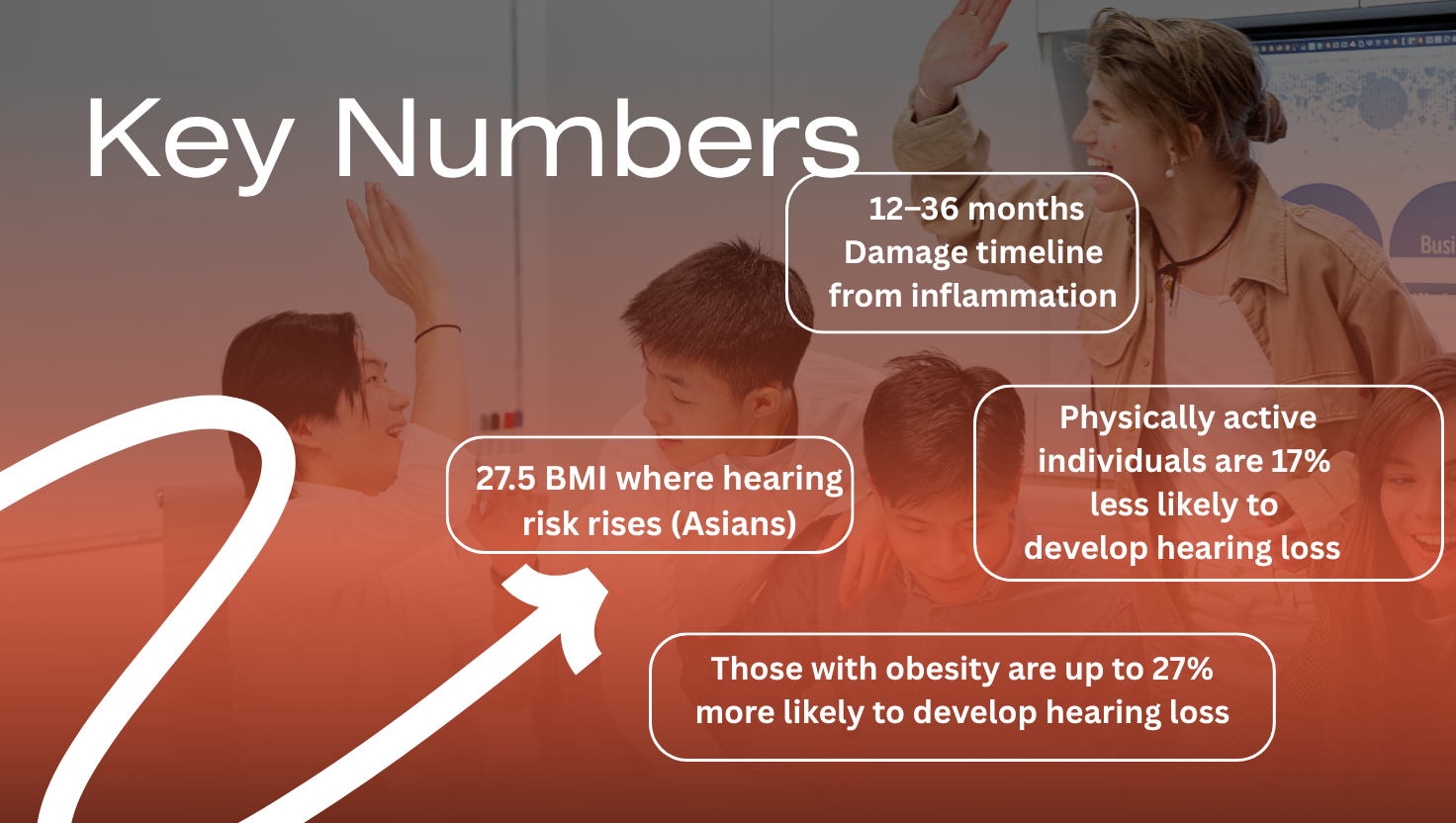
When excess fat builds up, it causes chronic inflammation. That inflammation damages blood vessels, including the ones that feed your inner ear. Over a period of 12–36 months, this damage can gradually reduce your hearing sensitivity—especially at higher frequencies like children’s voices or birdsong.
How Significant a Risk Factor Is Obesity? Obesity ranks among the top modifiable risk factors alongside noise exposure and unmanaged diabetes. A large meta-analysis found that individuals classified as obese had a 1.40 times higher odds of experiencing hearing loss, and each 5 kg/m² increase in BMI corresponded with a 15% rise in risk. These findings highlight obesity’s significance—just behind noise exposure and poorly managed diabetes—as a modifiable contributor to hearing decline .
Is There a Threshold of Body Fat That Raises Risk? A BMI above 30 is generally considered obese. Research suggests that a Body Fat Percentage (BFP) above 25% for men and 32% for women is associated with higher inflammatory markers and cardiovascular strain—both of which can affect hearing. These numbers vary slightly by age and ethnicity, but they give a general idea of risk zones.
Sources: NIH, NHMS 2019
Why Hearing Needs a Healthy Body
Obesity triggers the release of inflammatory cytokines—chemical messengers that damage tissue. That damage reaches the small, delicate structures of your cochlea, leading to permanent hearing loss.
Key terms: chronic inflammation, inflammatory mediators, blood vessels
Metabolic Impact on Hearing — More Than Just Weight
Insulin Resistance & Cochlear Damage
When your body has trouble using insulin (insulin resistance), it raises blood glucose. High sugar levels harm the tiny hair cells in the ear. These cells don’t grow back. That’s why many people with diabetes also experience hearing issues.
Source: Korea National Health and Nutrition Examination Survey
The Immune System’s Role
Obesity alters how your immune system responds. Fat cells, especially visceral fat around your organs, release pro-inflammatory cytokines like TNF-α and IL-6. These cytokines confuse your body into thinking it’s under attack all the time.
Instead of reacting only to real threats, the immune system becomes chronically activated—even when there’s no infection. This is largely due to inflammatory substances released by fat cells.
Your immune system’s overactivation due to obesity isn’t just about eating often—it’s more about what and how much you eat. Frequent consumption of calorie-dense, processed foods maintains a pro-inflammatory internal environment that wears down tissue integrity, especially in high-sensitivity zones like the cochlea.
The Heart-Ear Connection: How Blood Flow Powers Your Hearing

Your Ears Need Good Circulation
Think of your ears like rivers—they need a steady, unobstructed flow to thrive. When obesity adds pressure to your cardiovascular system, it clogs the flow. The heart must pump harder to deliver blood, but the strain stiffens vessels and narrows pathways. This starves the inner ear of oxygen, impairing the delicate hair cells responsible for detecting sound. Once damaged, these cells don’t regenerate. This is why even slight changes in blood pressure and vessel integrity can reduce hearing—especially higher frequencies—over time.
Cardiovascular Strain from Obesity
Excess body fat forces the heart to use more energy to circulate blood. This effort stresses the capillary walls of the inner ear and reduces oxygen supply to the cochlea. The result? A weakened hearing system and increased risk of coronary artery disease, heart attacks, and heart failure—all of which further restrict blood flow to auditory structures.
Blood Clots, Chest Pain & Hearing Emergencies
Obesity-related cardiovascular events can trigger hearing loss in sudden, dramatic ways. A blood clot or sudden drop in oxygen can cause immediate, irreversible hearing damage. If you notice sudden hearing changes—especially paired with dizziness, chest pain, or faintness—seek emergency medical care immediately.
A 2013 study in the American Journal of Medicine found that those who were physically active were 17% less likely to develop hearing loss, while obese individuals were 27% more likely to experience it—largely due to circulation issues and plaque buildup.
Lifestyle Habits That Protect Hearing & Heart Together
Move More, Hear More
Exercise boosts skeletal muscle activity, which improves cardiovascular output. Try brisk walks, cycling, or dancing. It strengthens your heart and keeps your ears fed with oxygen-rich blood. Aim for:
- Frequency: 5 days/week
- Intensity: Moderate (brisk walking, dancing) at 50–70% of your maximum heart rate
- Duration: 30–45 minutes
Eat Smart for Ears
.A nutrient-rich diet lowers inflammation and improves vascular health. Focus on:
- Omega-3 rich foods: Salmon, chia seeds, walnuts
- Leafy greens: Spinach, kale (high in folate and magnesium)
- Antioxidant fruits: Berries, oranges
- Whole grains: Oats, brown rice for steady glucose levels
- Low-fat dairy: For vitamin D and calcium
Limit processed food, salt, and sugary drinks. Avoid trans fats and refined carbohydrates.
Cut the Risks
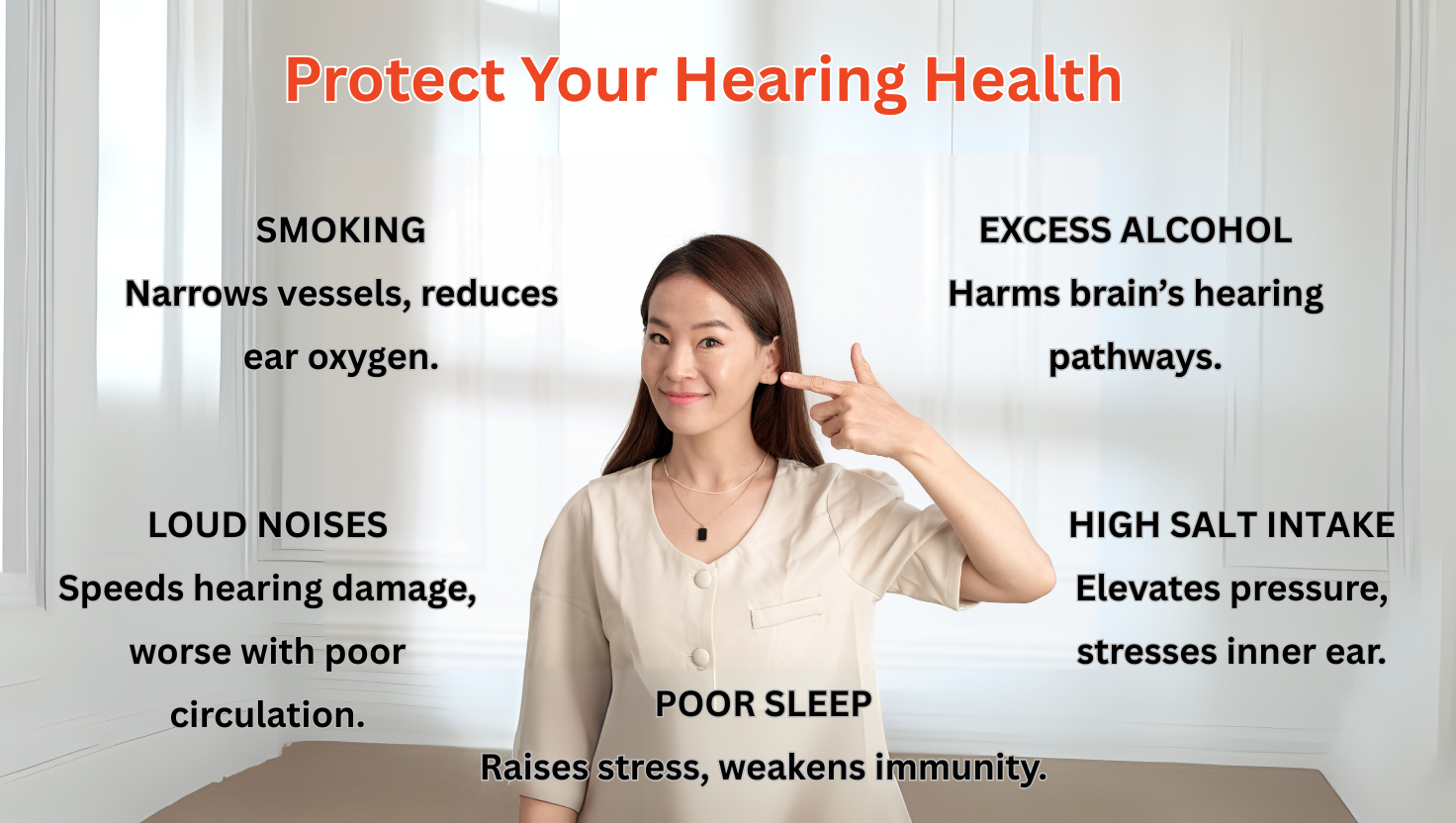
Avoiding these habits helps protect both hearing and the cardiovascular system:
- Smoking: Shrinks blood vessels and lowers oxygen supply to ears
- Excessive alcohol: Damages brain pathways involved in hearing
- Lack of sleep: Elevates stress hormones that impair immune balance
- High-sodium diet: Increases blood pressure, straining the inner ear
- Prolonged exposure to loud noise: Increases risk of hearing damage especially if circulation is already compromised
These habits damage both your circulatory system and inner ear cells.
Age-Related Hearing Loss & Obesity — A Risky Duo
Obesity Accelerates Hearing Decline
Aging already brings gradual hearing loss. Obesity speeds this up. According to NHMS 2019, 50.1% of Malaysian adults are overweight or obese—placing many at double the risk.
Double Trouble: Obesity with Age = Higher Risk
Older adults face greater comorbidity risks: cardiovascular disease, diabetes, and reduced hearing. When combined with excess weight, hearing loss progresses faster.
The Mood-Hearing Connection
Obesity, Depression & Social Isolation
Hearing loss and obesity can feed each other emotionally. For example, someone might avoid social situations due to both body image concerns and difficulty hearing others. This can lead to withdrawal, anxiety, and depression.
Analogy: “Not hearing your grandkids and not wanting to join them—the double burden.”
Malaysian Perspective: Stats That Hit Close to Home
How Common Is Obesity in Malaysia?
The National Health and Morbidity Survey 2019 revealed:
- 50.1% of adults in Malaysia are overweight or obese
- Obesity is rising among youth and urban populations
What That Means for Hearing
Obesity-related inflammation and vascular problems raise the risk of sensorineural hearing loss, particularly among older adults.
Source: Institute for Public Health Malaysia
Can Weight Loss Improve Hearing?

Yes — and Here’s Why
Reducing body weight improves circulation and lowers inflammation. Even a 5% weight drop has been shown to decrease inflammatory markers.
Source: The American Journal of Medicine (2013)
What the Science Says
Cross-sectional studies in Korea and the US show a clear relationship between BMI, metabolic syndrome, and hearing decline. The risk drops with better blood glucose and cardiovascular markers.
If Hearing Has Been Damaged by Weight Gain, Can It Improve?
In cases where hearing loss is caused by inflammation or restricted blood flow—not by irreversible damage to ear hair cells—improvement is possible. As circulation improves and inflammation decreases with weight loss, some users report better clarity and reduced muffling. However, permanent hearing loss from cochlear damage cannot be reversed, though hearing aids can help bridge that gap.
How to Monitor If Hearing Improves With Weight Loss
- Schedule regular hearing tests (every 3–6 months during active weight loss)
- Track ability to hear in noisy environments
- Ask loved ones if they notice improvements
- Use Clarisound’s follow-up support to adjust hearing aids if needed
Why Hearing Aids Matter More with Obesity
Missed Sounds = Missed Warnings
Untreated hearing loss affects more than just what you hear—it alters how you live. Poor hearing can lead to repeated misunderstandings with family, missed cues in conversations, and social withdrawal. Even more critically, it increases your risk of missing out on environmental sounds that are essential for safety—like car horns, fire alarms, or urgent medical instructions. Over time, this can impact your independence, reduce your mobility, and even heighten the risk of accidents and cognitive decline. Addressing hearing loss early is key to protecting your physical safety, emotional well-being, and quality of life.
How Modern Hearing Aids Help
If you’re already experiencing hearing loss and finding yourself withdrawing from activities or limiting your lifestyle, it’s important to know there’s a way forward. Left unaddressed, hearing loss can discourage social interaction and physical activity—two key components of mental and cardiovascular health. But with the right hearing aids, you can stay socially connected, engaged, and confident in conversations. This means you’re more likely to remain active, enjoy outings, and maintain a healthier body and mind. Clarisound’s advanced hearing technology supports not just your ears—but your overall quality of life.
Clarisound offers advanced devices from Signia and Rexton, both from WSA Group—a global leader investing over EUR 170 million annually in R&D with 50+ science institutions.

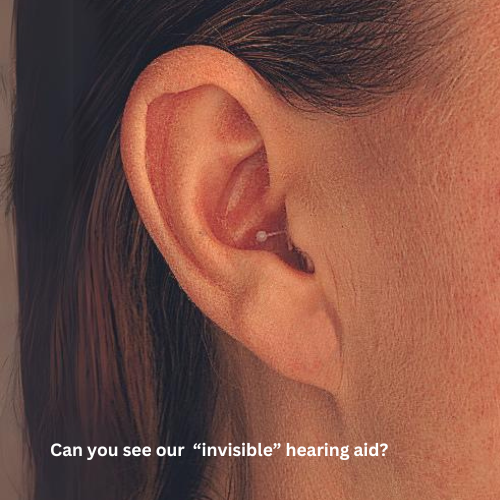
- Signia hearing aids feature Bluetooth connectivity, rechargeable batteries, and award-winning AI. The new Signia IX (Integrated Experience) processes 192,000 data points per second to understand your surroundings and focus on voices, adjusting 1,000 times per second. Choose from nearly invisible CIC (Completely-in-Canal) styles to stylish earbud designs that look like consumer electronics but function as precision medical devices.
- Rexton Rugged hearing aids are built for durability and reliability:
- Drop-proof, scratch-resistant, and IP68 water-resistant (up to 2m deep for 30 minutes)
- Sweat and chemical-resistant for tropical climates
- UV and heat-resistant for outdoor use
- Vibration-resistant for active usersThese hearing aids are not just tools—they’re lifelines, designed to keep you connected no matter the conditions. With 24/7 AI App Hearing Support, Clarisound ensures you always have access to adjustments, guidance, and updates for optimal hearing performance.
Ears That Hear, Life That Thrives
Obesity affects more than your physical appearance. It’s linked to serious health issues—including hearing loss.
But here’s the good news: small, steady changes in your lifestyle can lead to better hearing outcomes. Weight loss reduces inflammation and improves blood flow to the ear. Regular hearing check-ups help you track progress. And if hearing loss has already set in, modern hearing aids—paired with expert guidance—can help you hear better, live fuller.
Why Clarisound Makes the Difference
Beyond the Device — Real Support
Hearing aids are medical devices. You need an expert to guide the fitting, fine-tuning, and maintenance.
Clarisound is certified by the Medical Device Authority Malaysia (GDPMD) and all audiologists are registered with MAHPC.
Each person’s adjustment period is unique—typically between 2 to 12 weeks. This depends on how long the hearing loss has been left untreated. Gradual exposure and support make a difference.
Malaysia’s Trusted Hearing Care Expert

Clarisound is headquartered in Mid Valley Megamall and has two other outlets conveniently located in Puchong and Centrepoint. There are also outlets in Clarisound Penang and Clarisound Kuching.
Our customers consistently highlight our professionalism, patience, and strong aftercare support.
“My mother-in-law is impressed with how patient Rachel is in explaining things and fine-tuning her hearing aids. She now enjoys her social life again!” – Lionel Tan
What to Do If You Suspect Obesity-Linked Hearing Loss
Signs to Watch For
- You struggle to hear speech clearly in noise
- People sound muffled
- You often ask for repetition
- You feel more withdrawn socially
First Step? Get Tested
Clarisound provides free hearing tests and expert consultation. We take time to explain your options and walk with you through the journey.
Ears That Hear, Life That Thrives
Obesity affects more than your physical appearance. It’s linked to serious health issues—including hearing loss.
The good news? Taking charge of your health helps protect your hearing too. Whether it’s through better eating, staying active, or hearing aids from a trusted partner like Clarisound, the time to act is now.
Call Clarisound today and start hearing with confidence.
Reference:
Zhou, Y., Wu, S., Liu, X., et al. (2020). Body mass index, waist circumference, and risk of hearing loss: A systematic review and meta-analysis. Environmental Health and Preventive Medicine, 25, 57. https://doi.org/10.1186/s12199-020-00862-9