
Key Takeaways
- Hearing aid technology tiers mainly affect how well the device handles noise and changing environments, rather than how loud it can make sounds. Higher tiers provide more advanced speech-in-noise processing and automatic adjustments that help users follow conversations more comfortably in complex listening situations. Think of hearing aid technology tiers like camera technology. All cameras can take a photo, but higher-end models perform much better in low light and complex scenes.
- Accurate diagnosis and expert fitting by qualified hearing professionals are often more important than simply choosing the highest technology level. Research and clinical guidelines consistently show that properly fitted hearing aids—verified using best-practice methods such as Real-Ear Measurement—deliver significantly better outcomes than devices that are not carefully programmed and adjusted (The Hearing Review, n.d.).
- AI and automatic features provide the most benefit in busy Malaysian environments such as kopitiam, pasar malam, and wedding dinners by reducing listening effort and fatigue.
- At Clarisound, our MAHPC-registered audiologists are not paid on commission, so their focus is on recommending the hearing solution that best fits your hearing needs and daily lifestyle—not simply the most expensive device. After a comprehensive assessment, we guide you toward the technology level that will genuinely improve your listening experience in real-world situations.You are welcome to book a free hearing test to understand your hearing profile and explore the options that suit you best.
Introduction: Why Hearing Aid Technology Levels Matter (But Not the Way You Think)
If you’ve been exploring hearing aids for yourself or a loved one, you may have seen terms like “essential,” “standard,” “advanced,” and “premium.” These describe different technology levels within the same product range from brands like Signia and Rexton. Knowing what these terms really mean helps you choose the right solution—without overpaying for features you may not need.
The difference between hearing aid levels isn’t about volume—it’s about how clearly you can hear conversations, especially in noisy places.
Hearing aids within the same product family may look similar, but they differ in how intelligently they process sound. Higher technology levels use more advanced signal processing to separate speech from background noise and adapt to changing environments.
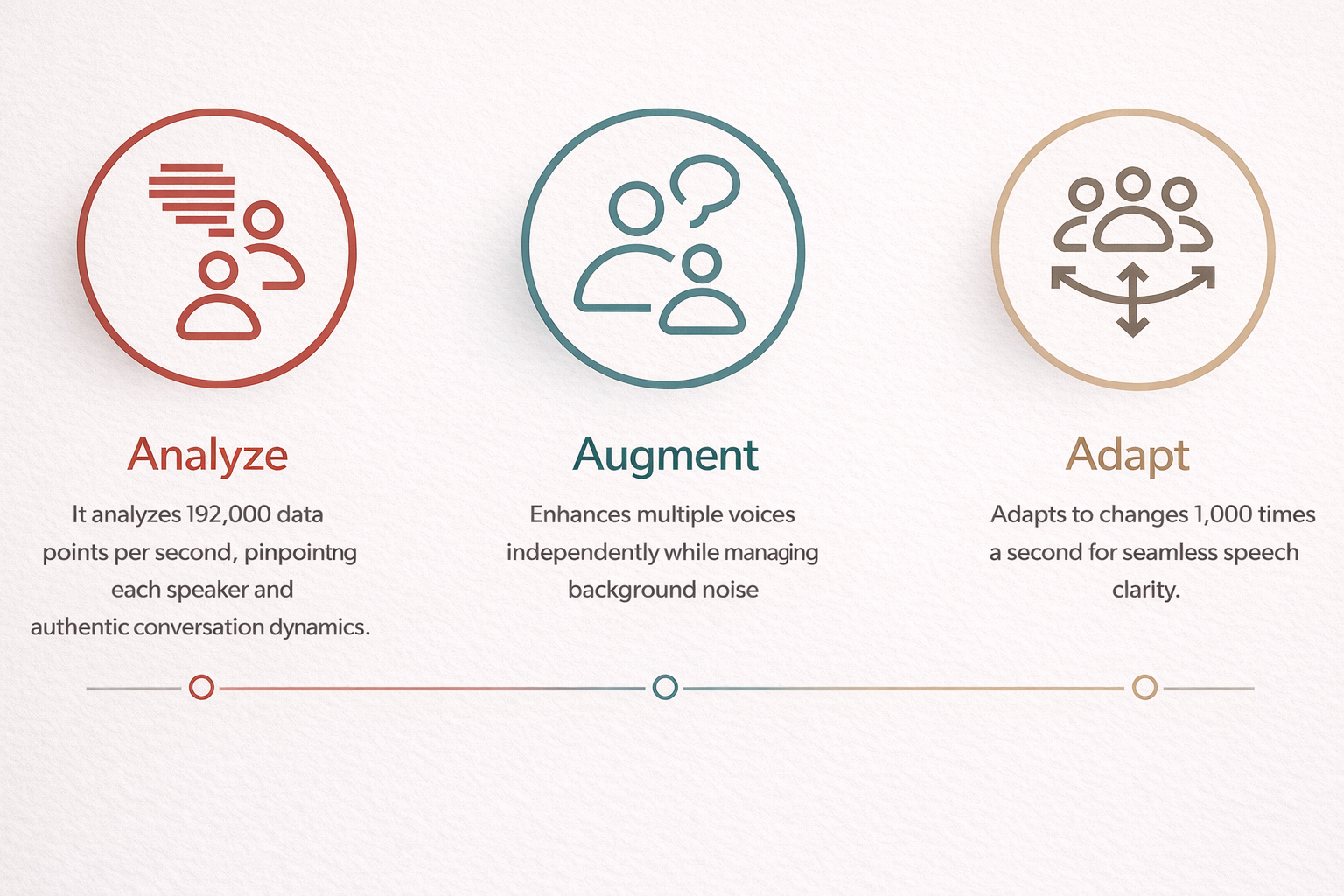
Real conversations are dynamic and constantly shifting. Advanced systems such as Signia Integrated Xperience are designed to keep up by tracking the wearer’s head movements and the positions of speakers, helping maintain clearer, more consistent speech understanding.
While features like Bluetooth and rechargeable batteries are common across many levels, the true difference lies in how well the device supports speech clarity in real-world situations.
We want to reassure you that even essential hearing aids, when correctly fitted, can significantly improve hearing and social connections. At Clarisound, we focus on a full rehabilitation pathway—from accurate hearing tests through correct device selection, expert fitting using Real-Ear Measurement, and proactive long-term aftercare—rather than simply selling a “premium gadget.” The device is only one part of better hearing.
How Hearing Aid Technology Levels Are Structured
Hearing aid manufacturers typically categorise their products into four or five technology tiers. While naming conventions vary, the underlying principle remains consistent across the industry.
When people explore hearing aids, they often come across terms like essential, standard, advanced, and premium.
The difference between hearing aid levels isn’t about volume—it’s about how clearly you can hear conversations, especially in noisy places.
Hearing aids within the same product family may look similar, but they differ in how intelligently they process sound. Higher technology levels use more advanced signal processing to separate speech from background noise and adapt as listening environments become more complex.
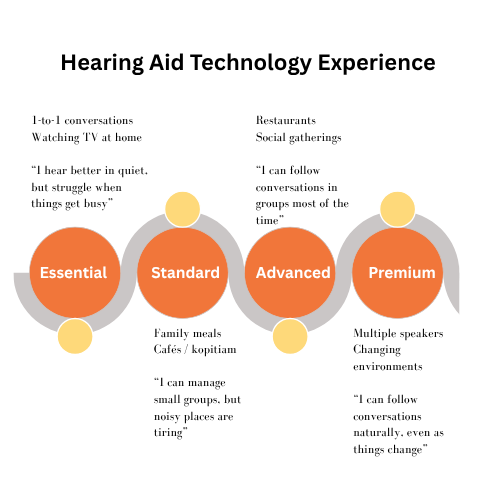
How This Feels in Real Life
Essential
“I hear better in quiet, but struggle when things get busy”
* Works well for:
* One-to-one conversations
* Watching TV at home
* Becomes challenging when:
* More than one person is speaking
* Background noise increases
Experience:
You can hear, but still need to focus hard to follow conversations
Standard
“I can manage small groups, but noisy places are still tiring”
* Comfortable in:
* Small family gatherings
* Cafés / kopitiam
* More difficult in:
* Larger groups
* Louder environments
Experience:
Less effort, but you may still miss parts of conversations
—
Advanced
“I can follow conversations in groups most of the time”
* Works well in:
* Restaurants
* Social gatherings
* Religious settings
* Still challenged when:
* Multiple voices overlap
* Noise changes quickly
Experience:
You stay engaged, but still need to pay attention
Premium
“I can follow conversations naturally, even as things change”
* Handles:
* Multiple speakers
* Movement between people
* Rapidly changing environments
* Real-life examples:
* Pasar malam
* Busy meetings
* Large family gatherings
Experience:
Conversations feel more effortless and natural
Why the Difference Matters
All hearing aids perform well in quiet environments.
The real difference appears when:
* People talk over each other
* Background noise increases
* Listening situations change dynamically
The more complex your listening environment, the more the technology matters.
How Modern Technology Helps
Real conversations don’t stand still. They are dynamic, unpredictable, and constantly changing—people move, turn, and speak from different directions.
Newer premium platforms, such as Signia Integrated Xperience, are designed to handle real-life conversations by tracking the wearer’s movement and the positions of multiple speakers, helping maintain clearer speech understanding in dynamic environments.
Programming First: Why Expert Fitting Beats “More Features”
Before discussing specific features, it is important to understand that successful hearing outcomes depend on both professional expertise and the right level of technology for your lifestyle.
Accurate assessment and programming by a qualified audiologist ensure that any hearing aid—regardless of level—is properly fitted and optimised. Without this, even the most advanced device may not perform as intended.
At the same time, research shows that while different technology levels may perform similarly in controlled or quieter environments, clear differences emerge in more complex, real-world situations. Higher-level devices are designed to better manage background noise, track speech, and adapt to changing environments—helping users follow conversations more comfortably and with less listening effort.
In practice, the best outcomes come from matching the technology level to the individual’s listening needs, supported by careful fitting and ongoing adjustment.
At Clarisound, we always begin with a comprehensive hearing assessment and medical history review.
We use Real-Ear Measurement (REM) for precise programming. This involves placing a tiny microphone in your ear canal and measuring sound at the eardrum. We then tune the hearing aid precisely to match your hearing test results—not just manufacturer averages.
Studies consistently show that proper fitting plays a critical role in hearing aid performance. A well-fitted device can often deliver better real-world outcomes than a higher-level device that has not been optimally programmed.
At Clarisound, our MAHPC-registered audiologists are not paid on commission, so recommendations are guided by what will genuinely benefit your hearing and daily lifestyle. We focus on matching the right level of technology to your needs—and supporting you with careful fitting and ongoing adjustments to achieve the best possible results.
Core Sound Processing: What Stays the Same Across Levels
All modern digital hearing aids share a common foundation. They use digital signal processing to analyse incoming sound across multiple frequency channels and amplify it according to your hearing profile. Even entry-level devices today include features such as feedback cancellation and basic noise management.
However, while the underlying framework is similar, the level of processing sophistication increases across technology tiers.
In quieter and more stable environments, different levels may perform quite similarly when properly fitted. But as listening situations become more complex—such as group conversations or environments with competing noise—higher-level devices provide more advanced processing to better manage these challenges.
The key difference is not simply making sound louder or clearer in general, but how effectively the hearing aid prioritises speech, reduces competing sounds, and adapts to changing environments in real time.
For individuals who spend most of their time in relatively quiet settings, the baseline processing available in lower technology levels may be sufficient when carefully fitted. However, for those who regularly encounter more dynamic listening environments, higher-level technology can provide a noticeable improvement in listening comfort and speech understanding.
The difference between hearing aid levels isn’t about volume—it’s about how clearly you can hear conversations, especially in noisy places.
Directional Microphones: Focusing on the Voice You Want
Directional microphones help hearing aids prioritise speech while reducing competing sounds from surrounding directions. This plays a key role in how well you can follow conversations, especially in group settings.
At more basic levels, hearing aids use simpler directional patterns that work well in stable listening environments but may be slower to adapt when sound sources change or when multiple people are speaking.
Higher technology levels introduce more advanced directionality. These systems can adjust more dynamically, helping the hearing aid respond as conversations shift, noise changes, or multiple speakers are present. The result is improved ability to stay focused on speech in real-world situations.
Consider everyday scenarios: hearing your grandchild across the dinner table during Chinese New Year, following conversations around a round table at a wedding kenduri, or keeping up with a friend in a busy kopitiam. These environments involve multiple speakers and changing noise, where more advanced directionality can reduce listening effort and improve clarity.
While much of this process is automatic, the audiologist plays an important role in configuring the system to suit your listening preferences—ensuring a comfortable balance between awareness of your surroundings and focus on conversation.
Directional microphones don’t just make sounds louder—they help your brain focus on what matters.
Noise Reduction: Comfort and Listening Effort, Not Just Loudness
Most people with hearing loss don’t just complain that sounds are too soft—they often say there is too much noise, especially in public places.
This is where hearing aid technology levels make the biggest difference.
Hearing aids do not remove noise completely. Instead, they work to reduce competing sounds while preserving speech as much as possible. Because speech and noise often overlap, especially in busy environments, this is a complex balance.
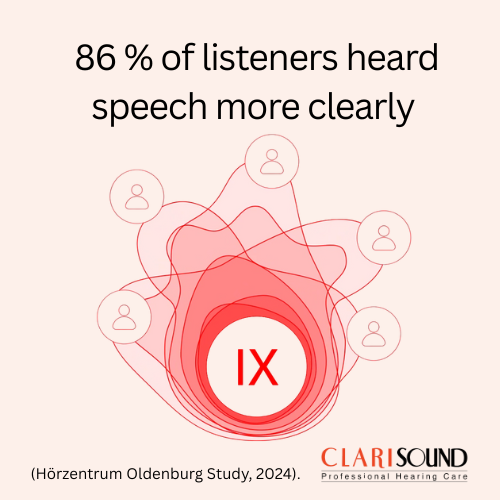
At more basic levels, noise reduction works well in steady, predictable environments, such as the hum of air conditioning, a ceiling fan, or distant traffic. However, when sound becomes more dynamic—such as multiple conversations or sudden environmental noises—the system has limited ability to manage these effectively.
Higher technology levels provide more advanced and adaptive noise management. They respond more precisely to changing sound environments, helping to reduce the impact of competing speech and sudden background sounds while keeping conversations clearer.
In real-life situations—restaurants, family gatherings, kopitiam conversations, or pasar malam—the goal is not silence, but to help you stay engaged without becoming mentally fatigued.
Research and clinical experience show that while differences may be less obvious in controlled test environments, higher-level technology can significantly reduce listening effort over time, especially in complex settings.
During follow-up visits, we fine-tune noise management based on your comfort and preferences. Some people prefer a more natural awareness of their surroundings, while others benefit from stronger filtering in busier environments. The right balance is always personalised.
The goal isn’t to remove noise—it’s to make conversations easier to follow.
Bluetooth Connectivity: Everyday Convenience—Now Redefined by Better Platforms
Bluetooth connectivity has become a standard feature in many modern hearing aids, adding meaningful convenience to daily life. The quality of the connectivity platform can significantly shape how easily you interact with sound across devices.
What Bluetooth Does
Bluetooth allows hearing aids to connect directly to smartphones, televisions (sometimes via accessories), and other devices. In practice, this means your hearing aids can function like customised wireless earbuds, delivering sound tailored to your hearing profile.
Bluetooth changes how certain sounds are delivered, especially in specific situations:
- TV listening without compromise
Stream sound directly to your hearing aids without increasing volume for others - Phone calls in both ears
Calls are delivered directly, making them easier to follow—especially in noise - Media and learning content
Hear religious talks, language lessons, or videos clearly regardless of your surroundings
A New Standard in Connectivity: Signia Bluetooth Classic (BCT)
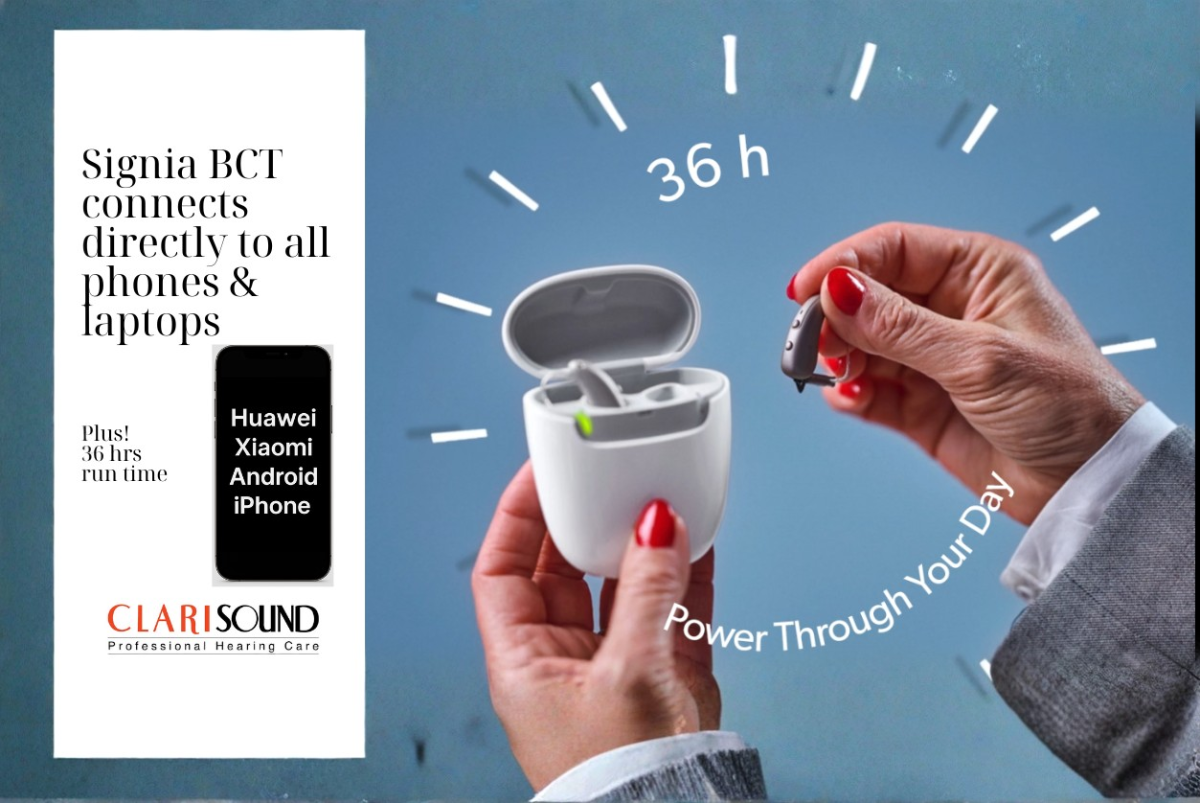
Not all Bluetooth systems in hearing aids are designed the same way.
Signia’s Bluetooth Classic Technology (BCT) is designed to make streaming simpler and more universal. By using the same Bluetooth standard found in everyday headphones, it allows:
- Direct streaming from both iPhone and Android devices
- Compatibility with a wider range of devices (including laptops and tablets)
- Consistent, reliable audio for calls and media
This reduces the need for intermediary accessories and creates a more seamless experience—especially for users who rely on multiple devices throughout the day.
What This Means in Practice
Across most hearing aids today, Bluetooth is available at many technology levels. However, the platform behind the connectivity—how widely it works, how easily it integrates, and how reliably it performs—can vary meaningfully.
Solutions like Signia BCT help move Bluetooth from a basic feature to a frictionless part of everyday life.
App Control vs Bluetooth Streaming: Two Different Layers
Modern hearing aids offer two types of wireless functionality. Understanding the difference helps avoid confusion.
App Control: Everyday Adjustments
Most hearing aids today come with a smartphone app that allows you to:
- Adjust volume (overall or per ear)
- Switch between listening programs
- Check battery status
- Locate your hearing aids (last known location)
These are app-based controls, supported by low-energy wireless connectivity. They do not require full Bluetooth audio streaming.
The Role of Professional Support
For Malaysian lifestyles, streaming religious talks, language lessons, and television dramas directly into your ears can make everyday listening far more enjoyable. Many of our customers appreciate being able to understand TV dialogue without turning the volume up so high that it disturbs neighbours.
While Bluetooth features are intuitive, proper setup and guidance make a significant difference.
At Clarisound, we take time to guide both customers and family members through the app step by step. We also provide follow-up support, including remote assistance if needed, so you can continue to use these features with confidence.
Rechargeable Technology: Daily Convenience and Environmental Benefits
Lithium-ion rechargeable hearing aids are now widely available across most modern models. For many older adults, this is an important consideration, as it removes the need to handle small batteries and simplifies daily use.
Practical Benefits
- No tiny batteries to handle: Ideal for customers with reduced vision or dexterity in their fingers
- Simple routine: Overnight charging similar to charging a smartphone
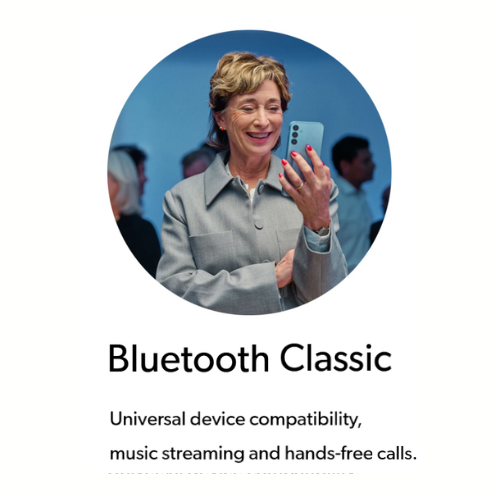
- Full-day power: Typical rechargeable models provide 18-36 hours of use on a single charge, even with regular Bluetooth streaming
Travel and Power Considerations
Some chargers include built-in power banks, which proves helpful when travelling between states or during occasional power outages. You can get several additional charges without needing a wall outlet.
Environmental Consideration
Fewer disposable batteries over several years means less waste—something many of our environmentally conscious customers appreciate.
AI and Machine Learning: Smarter Adaptation
Artificial intelligence in modern hearing aids refers to how the device uses trained algorithms to analyse sound environments and adjust automatically in real time. Most systems are designed to recognise acoustic patterns and respond appropriately.
Learning From Your Preferences: Subtle, Guided Personalisation

Some hearing aids allow a degree of personalisation based on your adjustments—typically made through a smartphone app.
For example, if you consistently adjust settings in certain environments (such as increasing speech focus in restaurants), the system may incorporate these preferences into future automatic responses.
This is not full “learning” in the human sense, but rather a guided refinement of how the device responds over time.
What This Feels Like in Daily Life
- Fewer manual adjustments
Settings begin to better reflect your preferences in familiar situations - More natural transitions
Changes between environments feel smoother and less abrupt - Reduced listening effort over time
The device becomes better aligned with how you prefer to hear
Where Real Differentiation Happens: Real-Time Conversation Processing
While preference-based adjustments help fine-tune your experience over time, the biggest difference in modern hearing technology comes from how well the device handles live, changing conversations.
As observed in Signia’s design approach:
Real conversations don’t stand still. They’re dynamic, unpredictable, and alive. That’s what makes them important—but also what makes them challenging for hearing aids to manage.
Signia Integrated Xperience is designed with this in mind. It continuously analyses:
- Your head movements
- The position and movement of multiple speakers
- Changes in background noise
This allows the device to adapt in real time, helping you stay engaged even as conversations shift around you.
AI Does Not Replace Professional Care
We want to be clear: AI does not replace the audiologist. We set the safe and effective limits during your fitting appointment. The AI then fine-tunes within those boundaries to match your lifestyle. This partnership between technology and professional expertise delivers the best outcomes.
Comparing Technology Levels: Essential vs Standard vs Advanced vs Premium
Rather than overwhelming you with technical specifications, here is a practical comparison based on lifestyle fit:
.Essential Level Hearing Aids
Best for:
Mostly quiet environments, one-on-one conversations, television at home
What you’ll notice:
- Basic support for hearing speech clearly in simple settings
- Effective for steady background sounds (e.g. fan, air-conditioning)
- Limited automatic adjustments when environments change
Consider if:
Your daily life is predictable and mostly quiet, and you want reliable, essential support
Standard Level Hearing Aids
Best for:
Quiet to mildly busy environments, small family gatherings, occasional outings
What you’ll notice:
- Improved comfort in light background noise
- More natural transitions between simple environments
- Better support in small group conversations
Consider if:
You have a moderately active lifestyle with some social interaction
Advanced Level Hearing Aids
Best for:
Mixed environments, regular social activities, restaurants, religious gatherings, travel
What you’ll notice:
- Stronger speech clarity in background noise
- More adaptive response as environments change
- Greater ease following conversations in small groups
Consider if:
Your day involves a variety of listening situations, including moderately noisy environments
Premium Level Hearing Aids
Best for:
Highly dynamic, complex environments—group conversations, busy restaurants, open spaces, and frequent transitions
What you’ll notice:
- The most refined handling of multiple speakers and changing noise
- Faster, smoother adjustments in real time
- Lower listening effort in challenging situations
Important: More expensive does not always mean better if your environment is mostly quiet. Cost should be weighed against realistic daily needs.

Choosing the Right Technology Level for Your Lifestyle
Selecting the right technology level is about matching your actual daily life, not just your degree of hearing loss or budget.
Questions We Ask During Consultation
- Where do you spend most of your time? (Home watching TV, office, markets, places of worship, large family gatherings)
- What are your “difficult” listening situations? (Cannot follow conversations at Chinese New Year dinners, struggle at kenduri, miss announcements at the mosque or temple)
- How often do you eat out or attend social events?
- Do you still work or volunteer?
- How comfortable are you with smartphone technology?
Lifestyle Trumps Hearing Loss Severity
Someone with mild hearing loss but a very busy social life might benefit more from Advanced technology than someone with moderate hearing loss who lives quietly at home. The environments you navigate matter as much as your audiogram.
Our Approach
We always present at least two suitable levels, explain the key differences in plain language. Our MAHPC-registered audiologists are non-sales commissioned based to ensure that our recommendations are always customer outcome focused and we will not pressure customers into the top tier hearing aids. We encourage involving adult children or spouses in the decision—they often understand daily challenges better and can help with phone and app management.
The Role of Aftercare, Tele-Audiology, and Long-Term Support
The technology level you choose is only one part of long-term success. Ongoing professional support is equally important.
What Clarisound Aftercare Includes
- Regular cleaning guidance and maintenance support
- Re-programming as your hearing or lifestyle changes
- Annual hearing tests to track any progression
- Troubleshooting and repairs
Tele-Audiology Support
For certain adjustments and counselling sessions, we offer remote support via video call. This proves especially helpful for customers living far from our centres or those with mobility challenges.
Fine-Tuning Over Time
We monitor how you cope in real-world environments and can adjust noise reduction, directionality, and Bluetooth settings during follow-up visits. Your hearing needs may evolve, and your devices should be recalibrated to reflect the changing hearing profile over time.
Aftercare as the “Final Technology Level”
Even the best premium devices cannot reach full potential without proper long-term follow-up. We consider ongoing care an essential part of your hearing journey, not an optional extra.
Clarisound’s Approach: Independent, Evidence-Based Recommendations
As an independently owned hearing healthcare provider in Malaysia, we select world’s leading manufacturer WSA and innovative products like Signia and Rexton based on sound quality, reliability, connectivity options, and value to our customers.
What Makes Our Approach Different _ Expert Led, Customer Focused
- Non-commissioned audiologists: Our team’s performance is measured by customer outcomes and satisfaction.
- International best practices: We use Real-Ear Measurement and structured follow-up visits for every customer, regardless of whether they choose essential or premium technology
- Honest guidance: We explain aid features in plain language and help you understand what you are actually paying for
Take the Next Step
If you are ready to explore which technology level suits your lifestyle, we invite you to book a free hearing test at your nearest Clarisound centre. You can also chat with an audiologist if you prefer to start with questions. Bring along family members who understand your daily challenges—they can provide valuable insights during the consultation.

FAQ: Hearing Aid Technology Levels, Connectivity, and Care
Will a premium hearing aid make me hear normally again?
No hearing aid—regardless of technology level—can fully restore natural hearing. What premium hearing aids offer is more comfortable listening and less fatigue in difficult environments. When combined with accurate programming and ongoing aftercare, hearing aids can significantly improve your connection with the world around you. The goal is clearer speech understanding and reduced effort, not “perfect” hearing.
Can I start with a lower level and upgrade later?
During your consultation, we discuss these possibilities so you understand your options before making a decision. Some customers prefer to start with Standard technology and evaluate whether they need additional features after experiencing real-world use.
Do I really need Bluetooth and a smartphone to use modern hearing aids?
Hearing aids work perfectly well without a smartphone. The core functions—amplification, noise reduction, directional focus—operate independently. However, Bluetooth connectivity and apps provide additional convenience for streaming calls, adjusting settings, and monitoring battery life. Where needed, family members can assist with app management, and our audiologists provide step-by-step guidance during fitting appointments.
How long will my hearing aids last, and does technology level affect lifespan?
Most hearing aids last approximately five years with proper care. Higher technology levels may receive software updates and additional features over time, but physical lifespan primarily depends on maintenance, usage patterns, and environmental exposure (humidity, earwax, handling). We provide cleaning guidance and maintenance support throughout the life of your devices.
What if I live outside major cities in Malaysia?
Clarisound centers are located across Malaysia – Kuala Lumpur, Selangor, Penang and Kuching. We support customers across Malaysia through a combination of in-clinic visits and tele-audiology where appropriate. We can plan follow-up appointments around your travel schedule to ensure you still receive the professional care you need. Many adjustments and counselling sessions can be conducted remotely via video call, reducing the need for frequent long-distance travel to our centres.
Reference List
The Hearing Review. (n.d.). Real-ear measurements: Why verification matters in hearing aid fitting.