
A sophisticated hearing aid cannot compensate for an incomplete understanding of your hearing needs.
Real-Ear Measurement can provide valuable objective information, but it cannot replace the judgement and experience of the audiologist interpreting it.
And even a well-selected, expertly fitted hearing aid needs support as you adapt and as your hearing or circumstances change.
That is why Clarisound approaches hearing rehabilitation through four interconnected pillars — each important on its own, but most effective when they work together.
Clarisound Four Pillars of Hearing Rehabilitation is a model shaped by more than two decades of caring for customers and by a simple belief: better hearing depends on the quality of the whole rehabilitation process, not simply the hearing aid.

Good hearing care begins with understanding what is happening — not with choosing a hearing aid. A professional hearing assessment helps establish the nature and degree of hearing difficulty. But the audiogram is only part of the picture.
Our audiologists also need to understand how hearing is affecting your everyday life — whether it’s participating confidently in meetings, following conversations with family and grandchildren, or enjoying social occasions without struggling to keep up.
The aim is not simply to measure hearing loss. It is to understand the hearing problem we are trying to solve.

The most advanced hearing aid is not automatically the most appropriate hearing aid.
Different levels of technology offer different benefits. What matters is whether those benefits are relevant to your hearing profile, listening environments, preferences, dexterity, connectivity needs and budget.
Our audiologists are non-sales-commissioned, so their personal income does not change according to the hearing aid you select.
The objective is to recommend technology that is appropriate for the person — not simply the highest level of technology available.
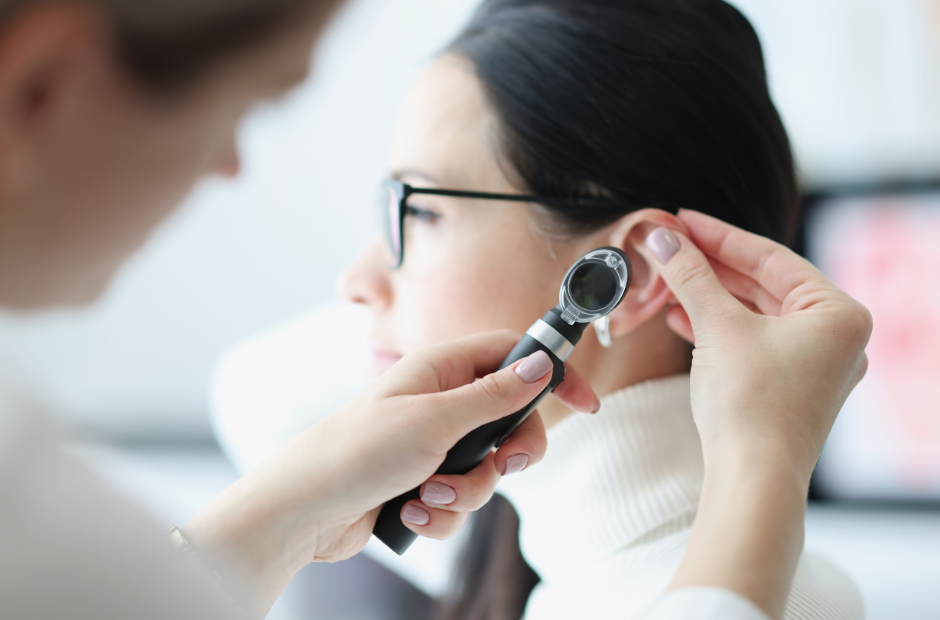
REM is a powerful tool. Expertise is what turns the information it provides into a better fitting.

A hearing aid fitting is not the end of hearing rehabilitation.
How well you hear with hearing aids can change over time. Your hearing may change, your listening needs may evolve, and your hearing aids may need maintenance or adjustments to continue performing well.
Our goal isn’t simply to help you hear better at the fitting, but to help you continue hearing well over time.

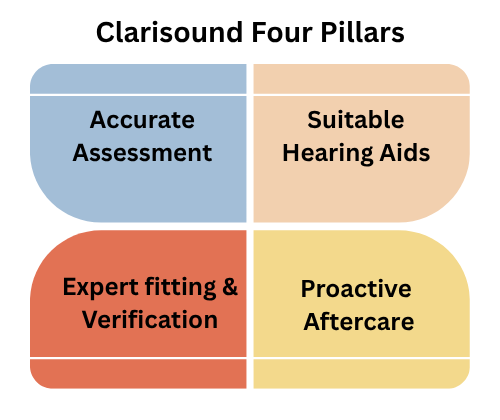
The Four Pillars are not four separate services competing for attention.
They are designed to support one another.
Accurate assessment helps us understand what needs to improve. Suitable technology gives us the tools to address it. Expert fitting and verification help us use that technology well. Proactive Aftercare keeps the care responsive as real life and hearing needs evolve.
Better hearing is rarely about finding one perfect ingredient. It is about getting the important things right — and making them work together.
Lionel Tan describes the care his mother-in-law receives from Rachel at Clarisound: patience in explaining and teaching her how to use her hearing aids, responsiveness when tuning or adjustments are needed, and continuing support that has encouraged her to keep wearing them.
“This has helped to encourage MIL to continue using the device. As a result, communications with the family and her friends have improved and she can continue to enjoy her active social life.”
— Lionel Tan
That is the outcome the Four Pillars are designed to support: not simply a hearing aid that works in a test environment, but better hearing that continues to make a difference in everyday life.
The Four Pillars give a clear structure to an idea that has shaped Clarisound for years: hearing aids are important, but they are only one part of successful hearing rehabilitation.
Changing lives starts with changing how hearing care is delivered.
